

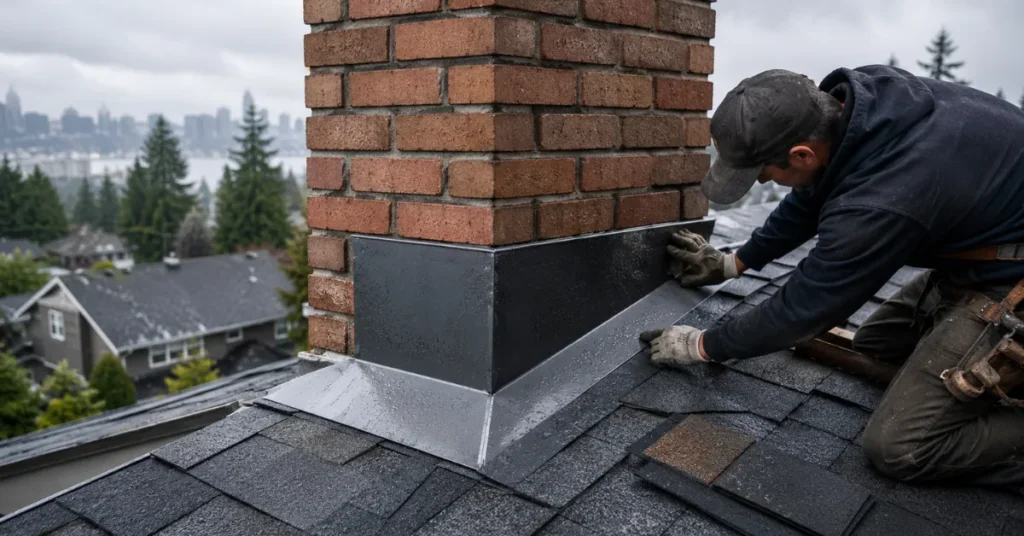
A roof is designed to protect a home from the elements, but some areas are naturally more vulnerable to water intrusion than others. One of the most common weak points on a roofing system is the area where the chimney meets the roof. This intersection requires a specialized waterproofing system known as chimney flashing. When flashing is properly installed and maintained, it prevents water from entering the home. However, when it becomes damaged, corroded, or improperly sealed, even a small defect can lead to significant water damage.
Many homeowners don’t notice flashing problems until visible leaks appear inside the house. Unfortunately, by that point, moisture may have already damaged roofing materials, insulation, drywall, and structural components. Understanding chimney flashing repair can help homeowners identify issues early, prevent costly repairs, and extend the life of their roof.
This guide explains everything you need to know about chimney flashing repair, including how flashing works, common warning signs, causes of failure, repair methods, replacement considerations, maintenance tips, and frequently asked questions.
What Is Chimney Flashing?
Chimney flashing is a system of metal materials installed where a chimney penetrates a roof. Because chimneys are built from masonry materials while roofs are typically covered with shingles, metal panels, or other roofing materials, a gap naturally exists between the two structures.
Without flashing, water would easily penetrate these gaps and enter the home.
The purpose of chimney flashing is to create a watertight seal that prevents moisture from entering vulnerable areas around the chimney. Flashing works by directing water away from the chimney and onto the roof surface, where it can safely flow into gutters and drainage systems.
Most flashing systems are made from galvanized steel, aluminum, copper, or stainless steel. These materials are selected for their durability and resistance to corrosion.
Properly installed chimney flashing is one of the most important defenses against roof leaks and water damage.
7 Signs You Need Chimney Flashing Repair
Water Stains on Ceilings or Walls
Brown, yellow, or discolored stains on ceilings and walls near your chimney are often among the first signs of a flashing problem. These stains develop when water seeps through damaged flashing and penetrates the roofing system.
While the leak may appear minor at first, ongoing moisture intrusion can damage drywall, insulation, and structural components. If stains become more noticeable after heavy rain or continue to expand over time, it’s important to investigate the condition of your chimney flashing.
Water Leaking Around the Chimney
Visible water leaks around the chimney are one of the clearest indicators that chimney flashing repair may be needed. Water may drip from the ceiling, run down interior walls, or collect in attic spaces after rainfall.
Even a small leak should not be ignored, as water can travel considerable distances before becoming visible inside the home. Promptly addressing leaking chimney flashing can help prevent more extensive and costly repairs.
Rusted or Corroded Flashing
Most chimney flashing systems are made from metal materials that are designed to withstand years of weather exposure. However, constant contact with moisture can eventually lead to rust and corrosion.
Rusted flashing loses its structural integrity and may develop holes, cracks, or weak spots that allow water to enter. If you notice visible rust around the base of your chimney, it may be time for a professional inspection and repair.
Loose or Separated Flashing Sections
Strong winds, aging materials, temperature fluctuations, and normal wear and tear can cause flashing sections to loosen or pull away from the chimney. Once flashing becomes detached, gaps can form that allow rainwater to bypass the protective barrier.
Loose flashing often worsens over time, especially during storms, making early repairs essential to maintaining a watertight roof system.
Mold or Mildew Growth
Damaged chimney flashing can allow moisture to enter hidden areas of the home, creating ideal conditions for mold and mildew growth. Homeowners may notice musty odors, discoloration on walls or ceilings, or visible mold in attic spaces.
Beyond causing property damage, mold can also affect indoor air quality and create health concerns for occupants. Addressing the source of moisture quickly can help prevent further mold development.
Damaged Roofing Materials Near the Chimney
When flashing fails, surrounding roofing materials are often among the first areas to show signs of damage. Shingles near the chimney may begin to curl, crack, blister, or deteriorate prematurely due to repeated water exposure.
In some cases, roofing materials may become loose or completely detached. Visible wear around the chimney area often indicates that water is penetrating beneath the roof surface and should be investigated promptly.
Recurring Roof Leaks During Rainstorms
If your home experiences roof leaks whenever heavy rain occurs, chimney flashing may be the culprit. Unlike isolated leaks caused by temporary issues, recurring leaks often indicate an underlying flashing problem that continues to allow water intrusion.
Ignoring these leaks can lead to worsening water damage, mold growth, wood rot, and expensive structural repairs. Identifying and repairing damaged flashing early can help protect your home and extend the lifespan of your roof.
Why Is Chimney Flashing So Important in Seattle?
Many homeowners focus on shingles when thinking about roof protection, but flashing is equally important. In fact, a roof with brand-new shingles can still develop leaks if the flashing system fails.
The area surrounding a chimney experiences constant exposure to water runoff during rainstorms. Because chimneys interrupt the flow of water down the roof, moisture naturally accumulates around these roof penetrations.
A properly functioning flashing system helps:
- Prevent roof leaks
- Protect roof decking
- Reduce moisture damage
- Prevent mold growth
- Protect attic insulation
- Preserve structural framing
- Extend roof lifespan
Even a small flashing defect can allow water to enter hidden areas of the home. This is why routine inspections and timely chimney flashing repair are essential.
Regular inspections and prompt chimney flashing repair are particularly important for Seattle homes due to the region’s prolonged rainy season.
5 Types of Chimney Flashing Every Homeowner Should Know
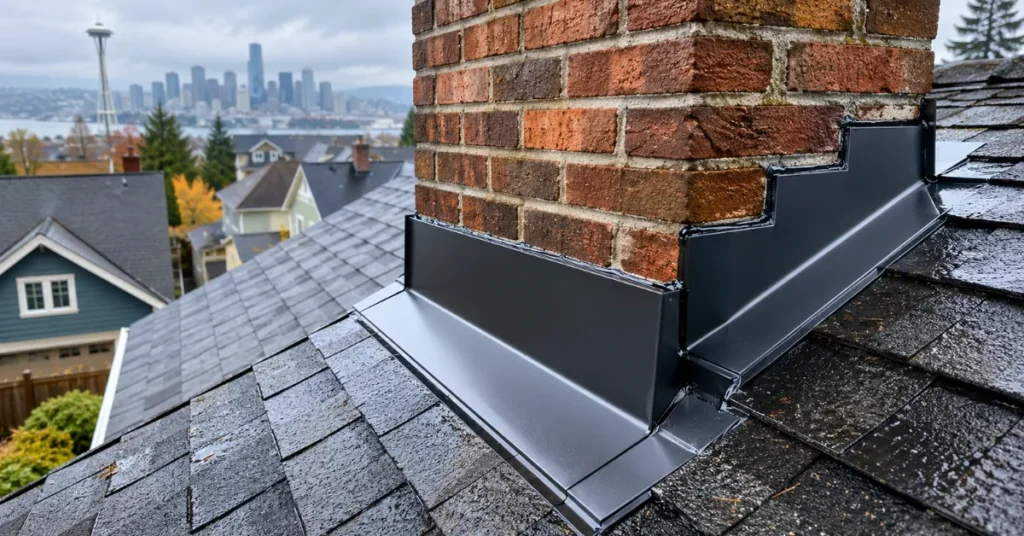
Step Flashing
Step flashing consists of individual pieces of metal installed between roofing materials and along the sides of the chimney. Each piece overlaps the next, creating a layered system that guides water downward and away from vulnerable areas.
Counter Flashing
Counter flashing is installed directly into the chimney masonry and overlaps the step flashing below.
This secondary layer provides additional protection and prevents water from entering behind the flashing system. Counter flashing is particularly important in Seattle because wind-driven rain can force water into small gaps around the chimney.
Base Flashing
Base flashing is installed at the lower section of the chimney where water naturally flows. It serves as the first line of defense against moisture penetration.
Apron Flashing
Apron flashing is commonly located at the front of the chimney. Its purpose is to direct water around the chimney and onto the roof surface.
Cricket Flashing
Large chimneys often require a cricket or saddle.
This structure creates a small peak behind the chimney that diverts water and debris away from the rear side of the chimney, reducing the risk of leaks.
Crickets are especially beneficial in Seattle because they help reduce standing water during periods of prolonged rainfall.
How Chimney Flashing Protects Your Home From Water Damage
Water naturally follows the path of least resistance. During rainstorms, large volumes of water flow across a roof surface. When that flow encounters a chimney, water can pool and collect around vulnerable joints.
Chimney flashing solves this problem by creating overlapping layers that guide water around the chimney rather than allowing it to penetrate beneath roofing materials.
A properly functioning flashing system helps prevent:
- Water leaks
- Mold growth
- Ceiling stains
- Damaged insulation
- Wood rot
- Structural deterioration
Without flashing, moisture would eventually enter the home and cause significant damage.
This is why flashing is considered one of the most critical waterproofing components on any roofing system.
Common Causes of Chimney Flashing Failure
Aging Materials: Even high-quality flashing eventually wears out. Years of exposure to weather conditions gradually weaken metal components and sealants.
Improper Installation: Poor workmanship is one of the leading causes of chimney flashing leaks. Incorrect installation can create gaps that allow water intrusion from day one.
Weather Exposure: Rain, wind, snow, ice, and UV rays constantly stress flashing systems. Over time, these environmental factors contribute to deterioration.
Freeze-Thaw Cycles: Water entering small cracks can freeze and expand. Repeated expansion and contraction may damage flashing and surrounding masonry.
Structural Movement: Homes naturally settle over time. Even minor shifts can create gaps that compromise flashing performance.
Lack of Maintenance: Routine inspections often identify small flashing issues before they become major problems. Neglected flashing systems are more likely to fail unexpectedly.
What Happens If Damaged Chimney Flashing Is Left Unrepaired?
Ignoring flashing problems can lead to serious consequences.
Roof Deck Damage: Moisture entering beneath roofing materials can weaken roof decking and structural supports.
Mold Growth: Persistent moisture creates ideal conditions for mold and mildew development.
Insulation Damage: Wet insulation loses effectiveness and may require replacement.
Interior Water Damage: Leaks can stain ceilings, damage drywall, and ruin interior finishes.
Structural Deterioration: Wood framing exposed to moisture may rot over time.
Expensive Repairs: Small flashing repairs often cost far less than repairing extensive water damage. Prompt repairs typically save homeowners significant money in the long run.
Chimney Flashing Repair vs. Replacement: Which Option Is Best?
Not all flashing issues require complete replacement. Minor problems can often be repaired successfully.
Repair may be appropriate when:
- Damage is localized
- Flashing remains structurally sound
- Corrosion is minimal
- Leaks are isolated
Replacement may be necessary when:
- Flashing is severely rusted
- Multiple sections have failed
- Installation was incorrect
- Materials have reached the end of their lifespan
A professional inspection can determine the most cost-effective solution.
In many cases, replacement provides better long-term value than repeatedly repairing aging materials.
Step-by-Step Chimney Flashing Repair Process
Inspection: The repair process begins with a thorough roof inspection. Professionals evaluate flashing condition, roofing materials, and chimney masonry.
Leak Detection: The source of water intrusion is identified. This step helps ensure repairs address the root cause of the problem.
Removal of Damaged Materials: Corroded or damaged flashing sections are removed. Nearby roofing materials may also require replacement.
Installation of New Flashing: New flashing is installed using proper layering techniques. Correct installation is critical for long-term performance.
Sealing and Waterproofing: High-quality sealants are applied where necessary. Sealants provide additional protection against moisture intrusion.
Final Inspection: The completed repair is inspected to verify proper performance. Water testing may be performed to confirm leak prevention.
How Much Does Chimney Flashing Repair Cost?
The cost of chimney flashing repair varies depending on several factors, including roof accessibility, chimney size, the extent of damage, materials used, and labor requirements.
Minor chimney flashing repairs typically range from $300 to $800, especially when only small sections of flashing need to be resealed or repaired.
More extensive repairs involving damaged flashing, surrounding roofing materials, or water intrusion generally cost between $800 and $1,500.
If a complete chimney flashing replacement is required, homeowners can expect to pay anywhere from $1,500 to $3,500+, depending on the roofing system and flashing material selected.
These include:
- Roof accessibility
- Chimney size
- Extent of damage
- Material selection
- Labor requirements
Minor flashing repairs typically cost less than complete replacement projects.
Copper flashing generally costs more than aluminum or galvanized steel but offers exceptional durability and longevity.
Homeowners should remember that delaying repairs often results in significantly higher expenses due to water damage.
Can You Repair Chimney Flashing Yourself?
Some homeowners consider DIY chimney flashing repair to save money.
While basic inspections can be performed safely from the ground, roofing work presents significant risks.
Potential DIY challenges include:
- Fall hazards
- Incorrect installation
- Hidden leaks
- Damage to roofing materials
- Voided warranties
Improper repairs may temporarily mask symptoms while allowing moisture damage to continue.
For most homeowners, professional repair remains the safest and most reliable option.
How Long Does Chimney Flashing Last?
The lifespan of chimney flashing depends on several factors.
These include:
- Material type
- Installation quality
- Climate conditions
- Maintenance practices
Galvanized steel flashing typically lasts 15 to 25 years.
Aluminum flashing often lasts 20 years or more.
Copper flashing can last 50 years or longer when properly installed and maintained.
Regular inspections can help maximize flashing lifespan and identify problems before failures occur.
8 Ways to Prevent Future Chimney Flashing Problems
Schedule Annual Roof Inspections: Regular inspections help identify issues early.
Repair Small Problems Quickly: Prompt repairs prevent minor defects from becoming major leaks.
Maintain Chimney Masonry: Cracked mortar joints can compromise flashing performance.
Keep Gutters Clean: Proper drainage reduces water accumulation.
Remove Roof Debris: Leaves and debris can trap moisture around flashing systems.
Address Storm Damage Promptly: Post-storm inspections help identify flashing damage.
Replace Aging Materials: Proactive replacement reduces emergency repair risks.
Work With Qualified Roofing Professionals: Proper installation remains the most effective way to prevent future flashing issues.
Frequently Asked Questions
What is the most common cause of chimney leaks?
Damaged or improperly installed flashing is one of the leading causes of chimney-related roof leaks.
Can chimney flashing be repaired without replacing the roof?
Yes. Flashing can often be repaired or replaced independently of the roofing system.
How often should chimney flashing be inspected?
Most experts recommend annual inspections and additional inspections following severe weather events.
Can damaged flashing cause mold?
Yes. Moisture intrusion resulting from flashing failure can create conditions favorable for mold growth.
Is flashing replacement expensive?
Costs vary based on roof complexity and material selection, but replacing flashing is generally less expensive than repairing extensive water damage.
Does every chimney need flashing?
Yes. Every chimney penetrating a roof requires a properly installed flashing system to prevent water intrusion.
Conclusion
Chimney flashing plays a critical role in preventing water intrusion and protecting your home from costly damage. By recognizing early warning signs and addressing issues promptly, homeowners can extend the lifespan of their roof and avoid expensive repairs. At EPIC Roofing Company, we provide expert chimney flashing repair and replacement services throughout Seattle. Whether you’re dealing with a leak or need a professional roof inspection, our team is here to help keep your home protected year-round.