
The average residential roof can last anywhere from 15 to 50 years or more, depending on the roofing material, installation quality, ventilation, maintenance, weather exposure, and overall roof design.
In Seattle, the local climate can make roof care particularly important. Frequent rain, prolonged moisture, moss growth, wind, and limited periods of dry weather can affect how roofing materials age. Two roofs installed at the same time can therefore reach very different stages of wear depending on how they were built and maintained.
For homeowners, the more useful question is not simply “How many years does a roof last?” It is how long your specific roof is likely to remain reliable and when replacement becomes more cost-effective than continued repairs.
Key Points
- Residential roofs commonly last 15–50+ years, depending on material and conditions.
- Asphalt shingles generally have a shorter lifespan than metal and tile roofing.
- Installation quality can significantly affect real-world roof performance.
- Seattle’s wet climate makes moisture, moss, drainage, and ventilation especially important.
- Roof age alone does not automatically mean replacement is necessary.
- Regular inspections and maintenance can help identify problems before major roof failure occurs.
How Long Does a Residential Roof Last?
Roof lifespan varies significantly by material.
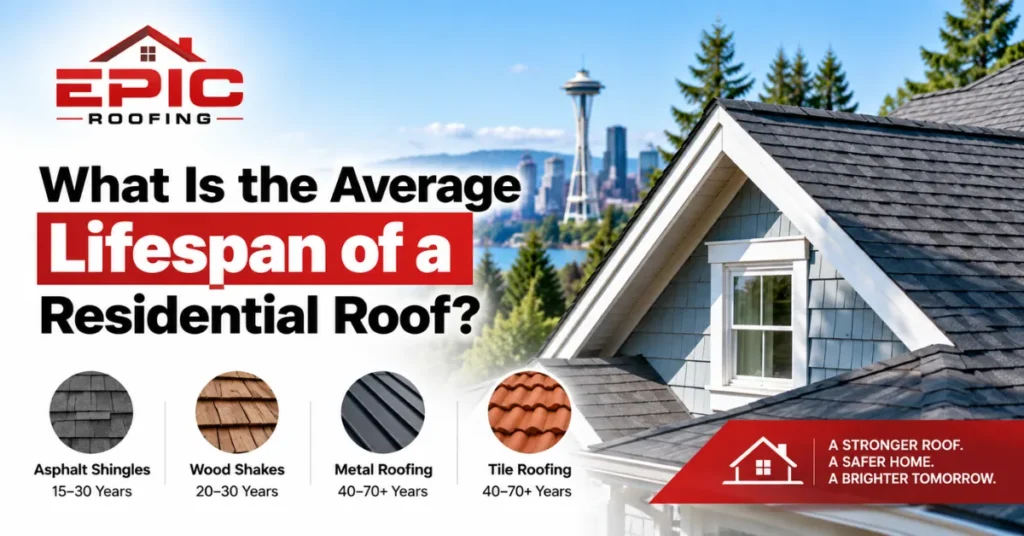
| Roofing Material | Typical Lifespan |
|---|---|
| Asphalt shingles | 15–30 years |
| Architectural asphalt shingles | 25–40 years |
| Wood shakes or shingles | 20–30 years |
| Metal roofing | 40–70+ years |
| Concrete or clay tile | 40–70+ years |
| Premium or specialty roofing | 40–75+ years |
These are general ranges rather than guarantees. Installation quality, ventilation, maintenance, moisture exposure, and the specific product can move a roof toward either end of its expected lifespan.
For example, a properly installed architectural shingle roof with good attic ventilation and routine maintenance may perform considerably longer than an inexpensive roof installed poorly and exposed to persistent moisture.
Asphalt Shingle Roof Lifespan
Asphalt shingles are among the most common residential roofing materials.
Basic asphalt shingles often have a practical lifespan of around 15 to 25 years, while higher-quality architectural shingles can often last 25 to 40 years under favorable conditions.
Several factors influence how quickly shingles deteriorate:
- Sun exposure
- Wind
- Repeated wetting and drying
- Moss and organic growth
- Poor attic ventilation
- Improper installation
- Damage around flashing and roof penetrations
Seattle homeowners should pay particular attention to moisture and moss. Moss does not automatically mean a roof needs replacement, but persistent growth can retain moisture and make it harder to identify the condition of the shingles underneath.
If you are seeing widespread granule loss, brittle or curling shingles, repeated leaks, or visible deterioration, a professional inspection can help determine whether repair or replacement makes more sense.
How Long Does a Metal Roof Last?
Metal roofing generally has a much longer service life than conventional asphalt shingles.
Depending on the system and material, a well-installed metal roof can last 40 to 70 years or longer.
Metal roofs are available in several forms, including steel, aluminum, and other systems designed for residential applications. Their long lifespan can make them attractive to homeowners who plan to stay in the property for many years.
However, long life still depends on installation. Fastener problems, failed coatings, poorly detailed penetrations, corrosion in certain environments, and improper flashing can create issues before the underlying metal reaches the end of its useful life.
How Long Do Cedar Shake Roofs Last?
Cedar roofing can provide roughly 20 to 30 years of service when properly installed and maintained, although conditions can vary substantially.
Seattle’s damp environment makes maintenance especially important for wood roofing.
Cedar shakes can be vulnerable to:
- Moisture retention
- Moss and algae
- Fungal growth
- Splitting
- Warping
- Decay
- Poor drainage
A cedar roof that is neglected may deteriorate much sooner than one that receives appropriate maintenance.
Homeowners considering cedar roofing should think about maintenance requirements as part of the material decision, rather than looking only at its appearance.
What Factors Affect Roof Lifespan?
The material itself is only one part of the equation.
Installation Quality
A high-quality roofing material cannot compensate for poor installation.
Incorrect flashing, inadequate underlayment, improper fastening, poor ventilation details, and installation mistakes can shorten the practical life of a roof significantly.
This is why choosing a qualified roofing contractor matters when installing a new roof.
Seattle Weather and Moisture
Roofs in the Seattle area regularly experience rain and prolonged moisture exposure.
Water can find its way into vulnerable areas around chimneys, skylights, vents, valleys, walls, and other penetrations if those components are improperly installed or begin to deteriorate.
Wind can also loosen or damage roofing components over time.
Roof Ventilation
Attic ventilation plays an important role in the overall roofing system.
Poor ventilation can contribute to excessive heat and moisture accumulation in the attic. Over time, that environment can contribute to deterioration of roofing materials and other building components.
A roof inspection should therefore consider both the visible roofing surface and the ventilation system.
Maintenance
Regular maintenance can help catch relatively small problems before they develop into expensive repairs.
A homeowner may not notice a damaged flashing component, a small leak, or early shingle deterioration from the ground.
Routine inspections can identify problems while they are still manageable.
Moss and Organic Growth
Moss is particularly relevant for Seattle-area homeowners.
A roof underneath dense tree cover may receive less sunlight and remain damp longer after rainfall. This can create favorable conditions for moss growth.
Removing moss improperly can also damage roofing materials. Aggressive pressure washing, for example, may cause unnecessary wear depending on the roofing system.
How Do You Know When a Roof Is Near the End of Its Life?
Age alone does not determine whether a roof needs to be replaced.
A 25-year-old roof can sometimes continue performing well, while a much newer roof may require substantial work because of storm damage, installation issues, or neglected maintenance.
Signs that deserve closer attention include:
Curling or Buckling Shingles
Shingles that are visibly curling, buckling, or losing their shape may be approaching the end of their useful service life.
Missing or Damaged Shingles
Missing shingles expose the underlying roofing system to weather and can create openings where water enters.
A few isolated damaged shingles may be repairable. Widespread damage is a different situation.
Granule Loss
Loose granules commonly collect in gutters as asphalt shingles age.
Some granule loss is normal, particularly as shingles wear, but significant or widespread loss can indicate advanced deterioration.
Recurring Roof Leaks
One leak does not automatically mean you need a new roof.
However, repeated leaks in different areas may indicate that the roof system is aging or that previous repairs are no longer solving the underlying problems.
Sagging
Visible sagging is a more serious warning sign because it may involve the roof structure or moisture damage beneath the roofing materials.
A qualified professional should assess significant sagging promptly.
Does a 20-Year-Old Roof Need Replacement?
Not necessarily.
Roof age is best treated as a risk indicator rather than an automatic replacement trigger.
A 20-year-old asphalt roof with good installation, proper ventilation, and limited damage may have useful life remaining. On the other hand, if that same roof has widespread granule loss, recurring leaks, deteriorated flashing, moss problems, and brittle shingles, replacement may make more financial sense.
The decision should be based on the roof’s current condition, remaining service life, repair history, and expected future maintenance costs.
Repair or Replace an Aging Roof?
This is one of the most important decisions homeowners face as a roof gets older.
A localized problem such as a damaged vent flashing, a small section of missing shingles, or an isolated leak may be appropriate for repair.
Replacement becomes more compelling when problems are widespread.
You may want to consider replacement when:
- Leaks keep returning
- A large portion of the shingles is deteriorated
- Repairs are becoming frequent
- The roof is approaching the upper end of its expected lifespan
- Storm damage affects a substantial area
- The underlying roofing system shows signs of deterioration
Our roof repair services in Seattle can address localized problems, while homeowners facing widespread or age-related deterioration may need to evaluate roof replacement in Seattle.
How Long Does a Roof Last in Seattle?
Seattle’s climate makes roof maintenance more important than simply following a generic lifespan number.
Rain, moisture, wind, moss, shade from mature trees, and drainage conditions all affect how a roof performs over time.
A home in a heavily shaded part of West Seattle may experience different moisture conditions from a home with greater sun exposure. Older neighborhoods such as Ballard, Queen Anne, Magnolia, and Capitol Hill also contain a wide range of roof designs and housing ages.
That local variation is why a professional roof assessment can be more useful than relying on an age chart alone.
For homeowners who want a more detailed evaluation, a Seattle roof inspection can help identify hidden leaks, flashing problems, ventilation concerns, storm damage, and signs of general deterioration.
Can Roof Maintenance Extend Its Lifespan?
Yes. Maintenance cannot make a roof last forever, but it can help preserve the roofing system and catch problems earlier.
Useful maintenance includes:
- Keeping gutters and drainage paths clear
- Removing problematic moss appropriately
- Checking flashing and roof penetrations
- Inspecting after significant wind or storm events
- Watching for damaged or missing shingles
- Maintaining proper attic ventilation
- Addressing minor leaks before they spread
The goal is not simply to make an old roof look better. Maintenance should reduce the conditions that accelerate deterioration and prevent small defects from becoming larger building-envelope problems.
When Is the Best Time to Replace a Residential Roof?
Waiting until a roof develops a major interior leak is rarely the ideal strategy.
If your roof is aging and an inspection reveals widespread deterioration, planning replacement before a serious failure can give you more control over the project.
It can also help avoid dealing with an emergency during a period of heavy rainfall.
Homeowners who are already seeing substantial damage may also need to consider emergency roofing services in Seattle while a permanent repair or replacement plan is developed.
Conclusion
The average residential roof can last 15 to 50 years or more, depending largely on its material, installation, maintenance, ventilation, and exposure to weather.
Asphalt shingles generally have shorter lifespans than metal, tile, or other premium roofing systems. But material alone is not enough to predict when a particular roof will fail.
For Seattle homeowners, moisture management, moss control, proper drainage, ventilation, and timely repairs can all affect long-term performance.
Rather than replacing a roof solely because it has reached a certain age, evaluate its current condition and remaining useful life. A professional inspection can help you determine whether repair, maintenance, or full replacement is the more practical next step.