
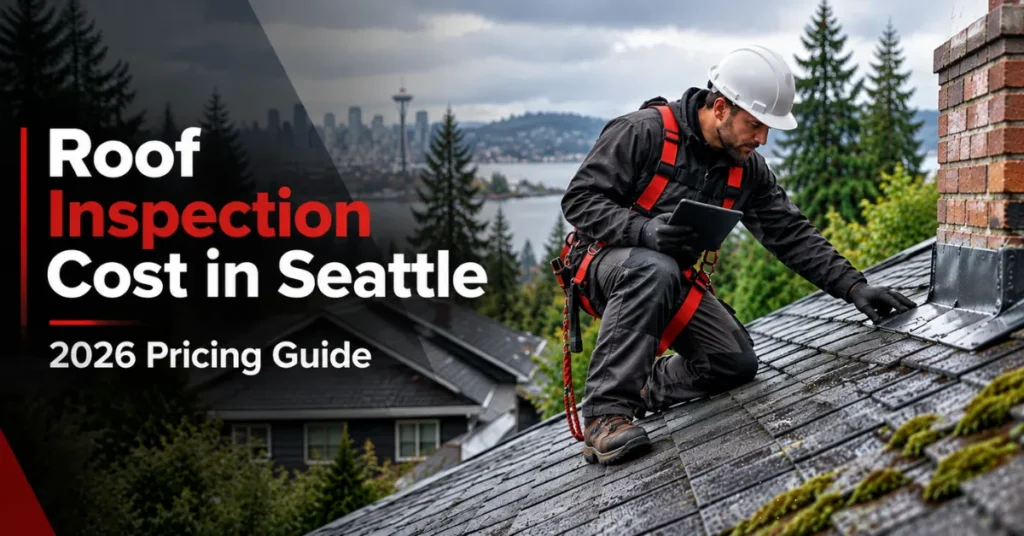
A roof inspection in Seattle typically costs $150 to $450 for a standard single-family home. Many local roofers offer free inspections when you’re already considering repairs or a replacement. Larger homes, steep roofs, specialty methods like thermal imaging, and commercial buildings cost more.
Seattle’s wet climate makes inspections more valuable here than in most places. Constant moisture, moss, and wind-driven rain can damage a roof long before you see a leak inside. This guide covers what you’ll pay, what drives the price, what a good inspection includes, and how to get the most value from it.
Key Points:
- A standard Seattle home roof inspection costs $150 to $450.
- Drone scans run $150 to $400, and thermal scans $400 to $700.
- Commercial inspections start around $500 and can pass $2,000.
- Price depends on roof size, pitch, material, method, report detail, and access.
- Inspect once a year in early fall, after major storms, and before buying or selling.
- Free inspections are usually sales assessments, so pay for an independent one when you need unbiased documentation.
- Always get a written report with photos and findings ranked by urgency.
Average Roof Inspection Cost in Seattle
| Inspection Type | Typical Cost |
|---|---|
| Basic visual inspection (residential) | $150 – $300 |
| Full inspection with written report and photos | $250 – $450 |
| Drone roof inspection | $150 – $400 |
| Infrared / thermal moisture scan | $400 – $700 |
| Pre-purchase or real estate roof inspection | $200 – $400 |
| Commercial roof inspection | $500 – $2,000+ |
These are typical market ranges, and your final price depends on the factors below. If you want an exact number for your property, our roof inspection service in Seattle starts with a clear scope and written findings, so you know what you’re paying for before we climb a ladder.
What Affects the Cost of a Roof Inspection?
Roof size and pitch
A small, low-slope roof takes less time to inspect than a large, steep one. Steep pitches may need extra safety equipment or a drone, which can raise the price. Homes with multiple levels, dormers, or complicated rooflines also take longer to cover properly.
Roofing material
Asphalt shingles are the fastest to inspect. Tile, slate, and standing seam metal take more time and specialized knowledge, which is why the type of roof you have can change the quote. Some materials can’t be walked on without risking damage, so the inspector has to use other methods.
Inspection method
A visual walk-through is the least expensive option. Drone surveys and thermal imaging cost more, but they can find hidden moisture and reach areas that are unsafe to walk.
Report detail
A quick verbal assessment costs less than a documented report with photos, measurements, and repair recommendations. If you need the report for an insurance claim or a home sale, pay for the written version. A verbal “looks fine” carries no weight with an adjuster or a buyer.
Location and access
Homes in dense neighborhoods, on hillsides, or with limited access can take longer. Pricing can also vary slightly across the Eastside. We handle inspections in Seattle and nearby areas like Bellevue and Kirkland.
Building type
Commercial roofs are larger and more complex, with drainage systems, rooftop equipment, and membrane seams to check. Property managers can learn more about our commercial roofing work in Seattle.
Types of Roof Inspections Explained
Not every inspection looks the same, and knowing the differences helps you avoid overpaying or under-buying.
Visual inspection. The inspector walks the roof, or views it from a ladder, and checks the surface, flashing, vents, and gutters. This is the right choice for a routine annual check on a typical home.
Drone inspection. A drone captures high-resolution photos of the entire roof without anyone stepping on it. It’s useful for steep, tall, or fragile roofs, and the images double as documentation.
Infrared or thermal inspection. Thermal cameras detect temperature differences that point to trapped moisture under the surface. This costs more, so it usually makes sense only when you suspect a hidden leak or when a flat or low-slope roof needs a deeper look.
Pre-purchase inspection. If you’re buying a home, a roof-specific inspection gives you more detail than a general home inspector will. It can also give you leverage in negotiations if repairs are needed.
What’s Included in a Professional Roof Inspection?
A thorough inspection should cover:
- Roof surface: missing, cracked, curled, or lifted shingles, plus granule loss
- Flashing: around chimneys, vents, skylights, and valleys. Failing flashing is one of the most common sources of leaks, and we explain the fix in our guide to chimney flashing repair
- Gutters and downspouts: clogs, sagging, and drainage problems
- Moss, algae, and debris: a major issue in the Pacific Northwest
- Attic and underside: moisture stains, mold, daylight through the decking, and insulation condition
- Structural signs: sagging, soft spots, or rot
- Photo documentation and a written summary with repair priorities
If an inspector skips the attic, that’s a red flag. Many leaks show up on the underside long before they appear on a ceiling.
Why Roof Inspections Matter in Seattle?
Seattle averages well over 150 rainy days a year, and the damp, mild climate encourages moss growth and slowly wears down roofing materials. Small problems like a lifted shingle or cracked sealant let water in quietly. By the time you notice a stain on the ceiling, the damage underneath can be extensive, including soaked insulation, rotted decking, and mold.
Regular inspections catch these issues early, when repairs are inexpensive. Waiting can turn a small fix into a major bill. For perspective, a typical roof repair in Seattle costs a fraction of what a full roof replacement does, and an inspection is how you stay on the repair side of that line.
Age matters too. If your roof is getting older, it helps to know the average lifespan of a residential roof so you can plan ahead instead of reacting to an emergency.
When Should You Get a Roof Inspection?
Schedule one in these situations:
- Once a year, ideally in early fall before the heavy rain starts. Our fall roof maintenance checklist covers what to do beforehand.
- After a major windstorm or heavy storm. Wind can lift shingles and loosen flashing without any obvious sign from the ground.
- Before buying or selling a home. A roof report protects buyers and strengthens a seller’s listing.
- When your roof is 15 to 20 years old, or approaching the end of its expected lifespan.
- When you see warning signs, such as ceiling stains, granules in the gutters, daylight in the attic, or curling shingles.
If water is actively coming in, don’t wait for a scheduled inspection. Call for 24/7 emergency roofing right away and protect your belongings in the meantime.
Are Free Roof Inspections Legitimate?
Yes, many reputable roofers offer free inspections, but understand the trade-off. A free inspection is usually a sales assessment: the contractor evaluates the roof and offers a repair or replacement estimate. That’s fine if you’re already considering work.
A paid, independent inspection makes more sense when you need unbiased documentation for a home sale, an insurance dispute, or a second opinion on a large quote. Whichever route you take, vet the contractor first. Our tips on finding a reliable roofing company in Seattle will help you spot red flags.
When you compare inspectors, look for a license, proof of insurance, local references, and a written report. Be cautious of anyone who pressures you to sign the same day or who finds major damage but won’t show you photos.
What Happens After the Inspection?
Your inspector should give you a clear next step, usually one of these:
- No action needed: your roof is in good shape, and you’ll re-check next year.
- Minor repairs: sealing flashing, replacing a few shingles, or clearing moss. This is typically handled through roof repair.
- Storm-related damage: if the inspection finds wind or storm damage, the photos and report can support your claim. Our storm damage service can help you document it.
- Major repairs or replacement: if damage is widespread or the roof has reached the end of its life, a full roof replacement may be the better investment.
Ask for the findings in priority order: urgent, soon, and monitor. That lets you spread out costs instead of facing one large bill.
How to Save Money on a Roof Inspection
- Bundle the inspection with a planned repair or estimate so the fee is waived or credited.
- Schedule in early fall or spring, before busy storm and emergency seasons.
- Clear obvious debris and have attic access ready so the inspector isn’t delayed.
- Compare at least two written scopes, not just prices.
- Keep your inspection reports. They help with insurance claims and raise resale value.
FAQs
How much does a roof inspection cost in Seattle?
Most residential inspections cost between $150 and $450. Drone and thermal inspections run higher, and commercial inspections start around $500.
How long does a roof inspection take?
A typical home takes 30 to 90 minutes, plus extra time for the written report. Larger or more complex roofs take longer.
Is a roof inspection worth it?
Yes. A small fee can prevent thousands of dollars in water damage and help you plan repairs or replacement on your own timeline.
How often should I have my roof inspected in Seattle?
At least once a year, and after any major storm. The wet climate makes annual checks especially important.
Will insurance cover a roof inspection?
Insurers don’t usually pay for routine inspections, but documentation from one can support a storm damage claim.
Can I inspect my own roof?
You can check from the ground with binoculars and look in your attic for stains or daylight. Walking on a wet or steep roof is dangerous, so leave the roof itself to a professional.
Should I get an inspection before buying a house?
Yes. A roof-specific inspection shows the remaining life and likely repair costs, which can help you negotiate the price.
Get a Roof Inspection From Epic Roofing
Epic Roofing provides detailed, honest roof inspections for homes and commercial buildings across Seattle and the Eastside. Our team documents every issue with photos, explains the findings in plain language, and gives you a prioritized plan with no pressure. When you’re ready, contact us to schedule your roof inspection.