
A commercial roof is one of the most important investments in any business property. It protects employees, customers, equipment, inventory, and the structural integrity of the building itself. However, like any major building component, commercial roofing systems eventually wear out and require replacement.
Many property owners wait until major leaks or visible damage appear before considering a roof replacement. Unfortunately, by that point, the roof may have already suffered extensive deterioration that leads to costly repairs, business disruptions, and potential safety concerns.
In Seattle, commercial roofs face additional challenges due to the region’s frequent rainfall, moisture exposure, windstorms, and seasonal weather fluctuations. These conditions can accelerate roof deterioration and make routine inspections even more important.
Recognizing the warning signs of commercial roof failure can help building owners make informed decisions, avoid unexpected expenses, and protect their investment. This guide explores the most common signs you need a commercial roof replacement and explains when replacement may be more cost-effective than continued repairs.
10 Signs You Need a Commercial Roof Replacement
Persistent Roof Leaks
Occasional roof leaks can often be repaired. However, recurring leaks in multiple areas may indicate widespread roof deterioration rather than isolated damage
When leaks continue to return despite repeated repairs, the roofing system may no longer provide adequate protection. Water intrusion can damage insulation, ceilings, walls, equipment, and inventory, making replacement a more cost-effective solution than ongoing repairs.
If your building experiences frequent leaks during Seattle’s rainy season, it may be time to consider a full commercial roof replacement.
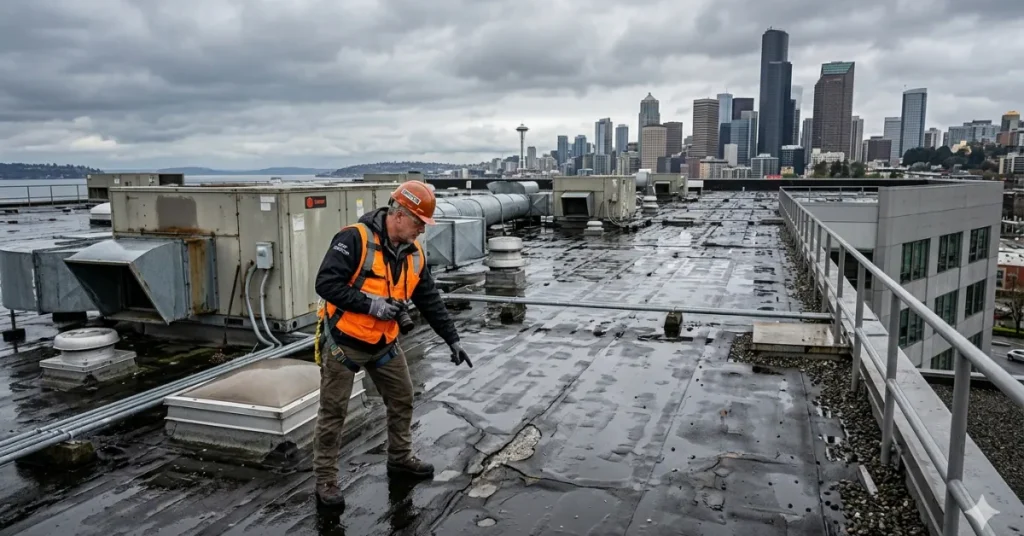
Ponding Water on the Roof
Ponding water occurs when water remains on the roof surface for more than 48 hours after rainfall.
This issue is particularly common on flat and low-slope commercial roofs. Standing water places additional stress on roofing materials and increases the risk of leaks, membrane deterioration, and structural damage.
In Seattle, where rainfall is frequent throughout much of the year, ponding water should never be ignored. Persistent drainage issues often indicate that the roofing system has reached the end of its useful life.
Visible Membrane Damage
Many commercial roofing systems rely on a waterproof membrane to protect the building.
Over time, roofing membranes can develop:
- Tears
- Punctures
- Cracks
- Open seams
- Shrinkage
Visible membrane damage reduces the roof’s ability to resist water intrusion and often signals advanced deterioration.
While small areas may be repairable, widespread membrane failure frequently requires commercial roof replacement.
Cracks, Blisters, or Bubbling
Blisters and bubbles typically form when moisture or air becomes trapped beneath the roofing membrane.
These defects weaken the roof surface and can eventually rupture, creating pathways for water intrusion.
Cracking may also occur due to age, UV exposure, and temperature fluctuations.
When blistering or cracking appears across large portions of the roof, replacement is often the most practical long-term solution.
Frequent Repair Costs
Every roof requires occasional maintenance, but constant repairs can quickly become expensive.
If your commercial roof requires repeated service calls, patch repairs, or emergency leak repairs, the cumulative costs may exceed the value of continued maintenance.
A useful guideline is that if repair costs approach a significant percentage of replacement costs, investing in a new roofing system often provides better long-term value.
Frequent repairs may indicate that the roof has reached the end of its service life.
Flashing Damage and Separation
Flashing protects vulnerable roof areas around HVAC units, vents, skylights, walls, and other penetrations.
Over time, flashing may:
- Corrode
- Separate from the roof surface
- Crack
- Pull away from joints
Damaged flashing is one of the most common causes of commercial roof leaks.
When flashing problems become widespread throughout the roofing system, replacement may be necessary to restore long-term performance.
Mold, Mildew, and Moisture Issues
Excess moisture inside a commercial building often indicates roofing problems.
Signs may include:
- Mold growth
- Musty odors
- Water stains
- Damp insulation
- Increased humidity levels
Moisture trapped within the roofing system can compromise insulation performance and contribute to indoor air quality concerns.
If water intrusion has been occurring for an extended period, roof replacement may be necessary to address the root cause.
Rising Energy Bills
An aging commercial roof can negatively impact energy efficiency.
Damaged insulation, moisture infiltration, and deteriorated roofing materials make it more difficult to regulate indoor temperatures.
As a result, HVAC systems must work harder to maintain comfortable conditions, increasing energy costs.
Many modern roofing systems offer improved insulation and reflective properties that can significantly reduce utility expenses.
Unexpected increases in energy bills may be a sign that your roof is no longer performing efficiently.
Sagging Roof Areas
A sagging roof should always be treated as a serious warning sign.
Sagging may indicate:
- Water damage
- Structural deterioration
- Decking failure
- Excessive moisture accumulation
Ignoring structural issues can create safety hazards and lead to more extensive building damage.
If any portion of a commercial roof appears uneven or depressed, a professional inspection should be scheduled immediately.
Your Roof Has Reached the End of Its Lifespan
Even a well-maintained commercial roof will eventually require replacement.
As roofing materials age, they become less effective at resisting water intrusion and weather-related wear.
If your roof is approaching or exceeding its expected lifespan, replacement may be the most practical and cost-effective option, especially if other warning signs are already present.
For many Seattle commercial properties, proactive replacement helps avoid costly emergency repairs during periods of heavy rainfall.
Why Commercial Roof Replacement Matters
A commercial roofing system does far more than keep rain out of a building. It plays a vital role in energy efficiency, structural protection, indoor comfort, and long-term property value.
When a roof begins to fail, problems often extend beyond the roofing materials themselves. Water intrusion can damage insulation, electrical systems, interior finishes, equipment, and inventory. In severe cases, prolonged moisture exposure may even compromise the structural components of the building.
Replacing an aging roof before catastrophic failure occurs helps minimize risk, improve building performance, and reduce long-term maintenance costs.
For Seattle businesses, proactive roof replacement is particularly important because constant exposure to moisture can accelerate roofing issues that may go unnoticed until significant damage has already occurred.
How Long Does a Commercial Roof Last?
The lifespan of a commercial roof depends on several factors, including roofing material, installation quality, maintenance practices, and environmental conditions.
Typical lifespans include:
- TPO Roofing: 20–30 years
- EPDM Roofing: 20–30 years
- PVC Roofing: 20–30 years
- Modified Bitumen Roofing: 15–25 years
- Built-Up Roofing (BUR): 20–30 years
- Metal Roofing Systems: 40–60 years
Seattle’s wet climate can shorten roof lifespan if routine maintenance and inspections are neglected. Regular evaluations help identify problems early and maximize the service life of the roofing system.
Commercial Roof Repair vs. Replacement
One of the most common questions building owners face is whether to repair or replace a commercial roof.
Repairs may be appropriate when:
- Damage is isolated
- The roof is relatively new
- Problems are limited to a specific area
- Overall roof condition remains good
Replacement may be the better option when:
- Leaks occur frequently
- Repair costs continue to increase
- Membrane damage is widespread
- Structural issues are present
- The roof has reached the end of its lifespan
A professional roof inspection can help determine which option provides the best long-term value.
Risks of Delaying Commercial Roof Replacement
Many building owners postpone roof replacement to avoid the upfront investment. While this may seem cost-effective in the short term, delaying replacement often leads to much higher expenses later. As a commercial roof continues to deteriorate, small problems can quickly develop into major structural issues.
One of the biggest risks is ongoing water intrusion. Leaks can damage insulation, ceilings, drywall, electrical systems, inventory, and expensive equipment. For businesses that rely on sensitive equipment or stored products, even minor leaks can result in significant financial losses.
Delaying replacement can also lead to mold and mildew growth. Moisture trapped within the roofing system creates an environment where mold can thrive, potentially impacting indoor air quality and creating health concerns for building occupants.
Structural damage is another major concern. Water that penetrates the roof system can weaken decking, support structures, and framing components. Over time, this may compromise the safety and integrity of the building.
Additionally, an aging roof often becomes less energy efficient. Damaged insulation and roofing materials allow conditioned air to escape, causing HVAC systems to work harder and increasing utility costs. In many cases, replacing an outdated roof can significantly improve energy performance and lower monthly operating expenses.
Benefits of Replacing a Commercial Roof
Although replacing a commercial roof represents a significant investment, it provides numerous long-term benefits that often outweigh the initial cost.
Improved Protection Against Leaks
A new roofing system provides reliable protection against water intrusion, reducing the risk of damage to the building and its contents. This is especially important in Seattle, where commercial roofs are exposed to frequent rainfall throughout much of the year.
Increased Energy Efficiency
Modern commercial roofing systems are designed to improve insulation and reflect solar heat. Many businesses experience lower heating and cooling costs after installing a new roof.
Reduced Maintenance Costs
Older roofs often require ongoing repairs and maintenance. Replacing a failing roof eliminates many recurring issues and reduces unexpected repair expenses.
Enhanced Property Value
A new roof can improve the overall value and marketability of a commercial property. Prospective buyers and tenants are often more attracted to buildings with recently installed roofing systems because they are less likely to face immediate maintenance concerns.
Better Building Appearance
A deteriorating roof can negatively affect the appearance of a commercial property. Replacing the roof improves curb appeal and helps maintain a professional image for customers, tenants, and visitors.
What to Expect During a Commercial Roof Replacement
Understanding the commercial roof replacement process can help building owners prepare for the project and minimize disruptions.
Initial Roof Inspection
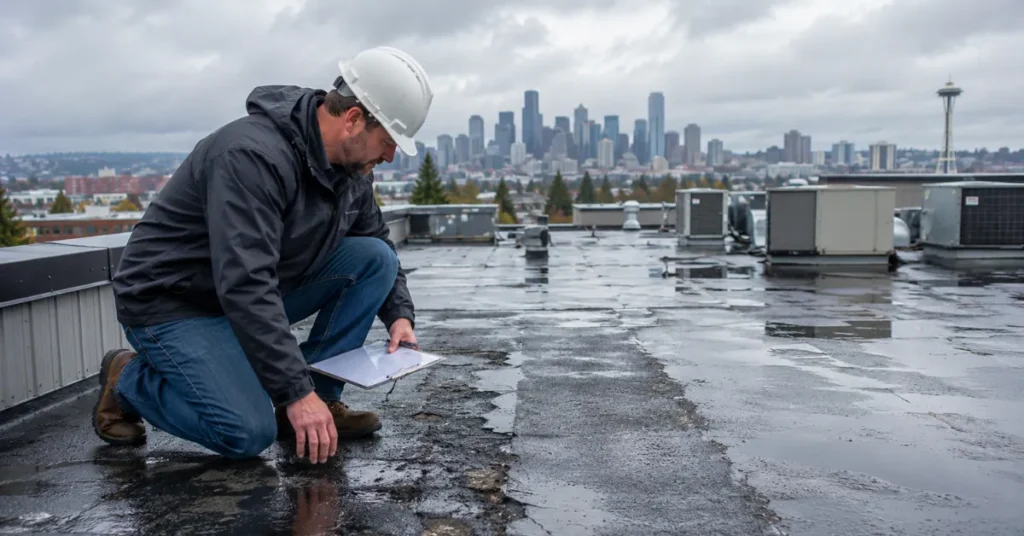
The process begins with a comprehensive roof inspection. Roofing professionals evaluate the existing system, identify areas of concern, and determine whether replacement is necessary.
Roof Assessment and Planning
Once replacement is recommended, contractors assess the size, condition, and design of the roof. Material options, timelines, and project requirements are discussed with the property owner.
Removal of Existing Roofing Materials
In many cases, old roofing materials must be removed before the new system can be installed. Contractors inspect the underlying roof deck for damage and make any necessary repairs.
Installation of New Roofing System
The new roofing system is installed according to manufacturer specifications and industry best practices. This may include insulation, underlayment, membrane installation, flashing, drainage improvements, and protective coatings.
Final Inspection and Quality Assurance
After installation is complete, a final inspection ensures the roof meets performance standards and all components have been installed correctly.
How Seattle Weather Affects Commercial Roofs
Seattle’s climate presents unique challenges for commercial roofing systems. Unlike regions that experience prolonged periods of extreme heat, Seattle’s roofing concerns are primarily related to moisture and rainfall.
Frequent rain increases the likelihood of ponding water, membrane deterioration, flashing damage, and leaks. Persistent moisture can also accelerate the growth of moss, algae, and mold on certain roofing systems.
Windstorms can loosen roofing materials and create openings where water can enter the building. Seasonal temperature fluctuations may cause roofing materials to expand and contract, gradually weakening seals and seams.
Because of these conditions, Seattle commercial property owners should prioritize regular roof inspections and preventative maintenance to maximize roof lifespan and identify potential issues before they become major problems.
How Often Should Commercial Roofs Be Inspected?
Routine inspections are one of the most effective ways to extend the life of a commercial roofing system.
Most roofing professionals recommend inspections:
- Twice per year
- After major storms
- Following significant weather events
- Before purchasing a commercial property
- When signs of damage become visible
Regular inspections help identify leaks, membrane damage, flashing problems, drainage issues, and other concerns before they result in costly repairs.
For commercial properties in Seattle, inspections before and after the rainy season can be especially beneficial.
FAQs
How do I know if my commercial roof needs replacement or repair?
If damage is isolated and the roof is relatively new, repairs may be sufficient. However, widespread leaks, extensive membrane damage, structural concerns, or an aging roof often indicate that replacement is the better long-term solution.
How long does a commercial roof replacement take?
The timeline varies depending on the size of the building, weather conditions, roofing materials, and project complexity. Many commercial roof replacements take several days to several weeks to complete.
What is the average lifespan of a commercial roof?
Most commercial roofing systems last between 20 and 30 years. Metal roofs can often last 40 to 60 years or longer with proper maintenance.
Can a commercial roof be replaced without disrupting business operations?
In many cases, yes. Experienced roofing contractors can develop project plans that minimize disruptions and allow businesses to continue operating during the replacement process.
What are the most common causes of commercial roof failure?
Common causes include aging materials, poor drainage, ponding water, membrane deterioration, flashing damage, severe weather, lack of maintenance, and improper installation.
Is commercial roof replacement a good investment?
For many property owners, replacing a failing roof improves energy efficiency, reduces repair costs, increases property value, and provides long-term protection against water damage.
Conclusion
A commercial roof is a critical component of any building, and recognizing the warning signs of failure can help property owners avoid costly repairs and unexpected disruptions. Persistent leaks, ponding water, membrane damage, flashing failures, mold growth, rising energy bills, and structural concerns are all indicators that a roof may be approaching the end of its useful life.
For Seattle businesses, the region’s wet climate makes proactive roof maintenance and timely replacement especially important. Frequent rainfall and moisture exposure can accelerate roof deterioration and increase the risk of water-related damage if problems are not addressed promptly.
Regular inspections, preventative maintenance, and professional evaluations can help determine whether repairs are sufficient or if a full commercial roof replacement in Seattle is necessary. By taking action before major failures occur, building owners can protect their investment, improve building performance, and ensure long-term reliability for years to come.