
Your roof is one of the most critical components of your home. It shields everything inside from rain, wind, heat, cold, and everything nature throws at it, yet most homeowners only think about it when something goes wrong.
Choosing the right roofing system involves more than picking a material you like the look of. The right roof depends on your climate, your budget, the architectural style of your home, and how lo durable and easy to repair you plan to stay. A poor choice can mean costly repairs, higher energy bills, or a roof that fails long before it should.
This guide covers every major roof type available today from classic asphalt shingles to living green roofs with honest breakdowns of cost, lifespan, maintenance, and best use cases, so you can make a confident, informed decision.
Understanding the Different Types of Roofs
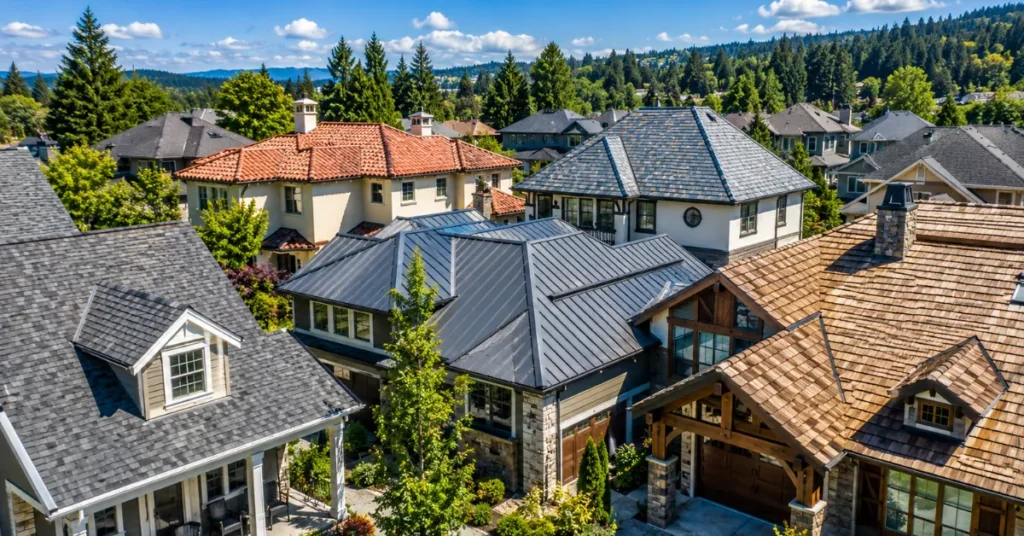
Roofing comes in two broad categories: materials (what the roof is made of) and styles (the shape and pitch of the roof structure). This guide focuses primarily on materials, since that’s what most homeowners are choosing when they reroof. The main materials in use today are asphalt shingles, metal, wood shake, slate, clay tile, concrete tile, composite/synthetic, and membrane systems for flat or low-slope roofs.
Three factors should drive your selection above all others: climate (what your roof needs to withstand), budget (upfront cost vs. lifetime value), and durability (how long the material realistically lasts in your specific conditions).
Asphalt Shingle Roofs
Asphalt shingles are the most widely used roofing material in North America, covering roughly 80% of residential homes. They consist of a fiberglass mat base coated with asphalt and ceramic granules. Three main types exist: 3-tab (flat, basic), architectural/dimensional (thicker, layered look), and luxury (thickest, mimics slate or cedar).
They are affordable ($3–$7 per square foot installed), widely available, and easy to repair. They come in dozens of colors and profiles, and virtually every contractor can install them. Architectural shingles carry 30-year warranties; luxury shingles push that to 50 years.
Shorter lifespan than premium alternatives. Vulnerable to extreme temperature swings, high winds, and hail. Prone to moss and algae in damp climates. Not environmentally friendly. They are petroleum-based and difficult to recycle.
- 3-tab: 15–20 years.
- Architectural: 25–30 years.
- Luxury: 30–50 years.
Key maintenance includes annual inspections, gutter cleaning, and prompt replacement of cracked or missing shingles.
Moderate climates, most roof pitches, and budget-conscious homeowners who want reliable performance without a premium price.
Metal Roofs
Standing seam (raised interlocking seams, premium option), metal shingles/tiles (stamped panels mimicking traditional materials), and corrugated panels (economical, common on agricultural buildings). Materials include galvanized steel, aluminum, copper, and zinc.
Exceptional durability resists fire, winds up to 140 mph, and hail. Sheds snow efficiently. Highly reflective, reducing cooling costs. Minimal maintenance. Recyclable and environmentally sustainable.
Available in a wide range of colors and profiles
Higher upfront cost ($8–$16 per square foot for steel; more for copper or zinc). Can be noisy in heavy rain without proper insulation. Expansion and contraction may loosen fasteners over time on older systems.
Steel: 40–70 years. Copper and zinc: 100+ years. One of the longest-lasting options available.
For homeowners planning to stay long-term, yes. Lower repair costs, energy savings, and no replacement cycles make it a strong lifetime value proposition.
Cedar Shake Roofs
Split or sawn pieces of western red cedar with natural oils that act as preservatives and insect repellents. Weathers to a distinguished silver-gray over time. Highly valued for its natural, rustic appearance
Exceptional natural beauty, good insulation (roughly twice the value of asphalt), renewable material, and a great fit for craftsman, cottage, and historic architectural styles.
The highest-maintenance common roofing material. Requires debris removal, moss and lichen control, and treatment with preservatives and fire retardants every 3–5 years. Restricted or prohibited in some fire-risk areas.
25–40 years when well-maintained. Neglected roofs may fail in 15–20 years. Performs best in dry climates; deteriorates faster in persistently wet conditions.
Slate Roofs
Quarried natural stone used on distinguished buildings for centuries. Combines extraordinary longevity, fire resistance, and timeless aesthetics that no synthetic material fully replicates.
Completely fireproof. Does not rot or attract insects. Resists freeze-thaw cycles. Available in multiple natural colors. Virtually maintenance-free when properly installed. Fully natural and recyclable.
Very heavy (800–1,500 lbs per square), often requiring structural reinforcement. Expensive ($15–$30 per square foot installed). Requires specialist installers who are increasingly scarce. Individual slates can crack under impact.
High-quality slate: 75–200 years. Hard slate from Vermont or Pennsylvania can last 150+ years. When feasible, it is arguably the last roof a building will ever need.
Clay Tile Roofs
Formed from natural clay and kiln-fired for density and durability. Most associated with Spanish, Mediterranean, and Mission-style architecture. Available in barrel, flat, and interlocking profiles.
Fireproof, rot-proof, and insect-proof. Excellent thermal mass in hot climates. Color is baked in — no fading. Low environmental impact. Generations-long performance when properly installed.
Excels in hot, dry climates (American Southwest, Mediterranean, coastal areas). Performs poorly in freeze-thaw climates — absorbed water expands during freezing and can crack tiles. Not recommended for cold northern climates.
50–100+ years. The tile itself rarely fails — the underlayment and flashings beneath typically need replacement every 20–30 years. Low overall maintenance.
Concrete Tile Roofs
Concrete tiles are made from a mixture of sand, cement, and water, and are molded into profiles that mimic clay tile, slate, or wood shake. They offer a similar aesthetic at a lower price point than natural clay. They are heavier than clay tiles and require the same structural considerations
Concrete tile is durable, fire-resistant, and available in a wide range of profiles and colors. It costs less than clay tile — typically $8–$12 per square foot installed versus $12–$20 for clay. The main disadvantage is that the surface coating can fade over time, unlike the through-body color of clay. Concrete is also slightly more prone to water absorption, which can be a concern in freeze-thaw climates. Moss and algae growth can be an issue in damp regions.
Concrete tile typically lasts 40–50 years — shorter than clay but still far longer than asphalt. It is a solid mid-range choice for homeowners who want the tile aesthetic without the premium clay price.
Composite Roofing
Composite roofing is an umbrella term for roofing products made from a blend of materials — typically recycled plastics, rubber, and sometimes fiberglass or cellulose fibers. These products are engineered to replicate the appearance of slate, wood shake, or clay tile while offering superior durability, lighter weight, and lower maintenance.
Composite roofing is impact-resistant, often earning Class 4 ratings — the highest available — which can lower homeowner’s insurance premiums. It is lightweight, requiring no structural reinforcement. It does not absorb water, rot, or support moss and algae growth. Installation is straightforward, and many products carry 40–50 year warranties. It is also made partly from recycled materials, giving it an environmental advantage over virgin materials.
Composite roofing typically costs $7–$12 per square foot installed — more than asphalt but less than natural slate or clay tile. For homeowners who want the look of premium materials with reduced maintenance and weight, it represents a compelling middle ground.
Synthetic Slate Roofing
Synthetic slate is a specific category of composite roofing engineered to replicate the look of natural slate. It is made from polymer compounds, sometimes with rubber or fiberglass reinforcement. High-quality synthetic slate is nearly indistinguishable from the real thing at ground level and offers several practical advantages over natural stone.
Synthetic slate weighs roughly 75% less than natural slate, making it suitable for homes that cannot support the structural load of stone. It is less expensive — typically $9–$14 per square foot installed compared to $15–$30+ for natural slate. It is more resistant to impact and does not crack underfoot during installation or repairs.
The main drawback is longevity. Even the best synthetic slate products do not match the multi-century lifespan of high-quality natural slate. Some early composite products also showed premature degradation, though manufacturing quality has improved significantly.
Quality synthetic slate products carry warranties of 40–50 years. Real-world lifespans of 30–50 years are reasonable to expect, depending on climate and product quality.
Flat Roofs
True flat roofs require membrane roofing systems that prevent water from penetrating the surface. The main options are EPDM (ethylene propylene diene monomer), a synthetic rubber membrane that is durable and easy to repair; TPO (thermoplastic polyolefin), a white reflective membrane popular for its energy efficiency; PVC roofing, which is similar to TPO with excellent chemical resistance; and built-up roofing (BUR), the traditional “tar and gravel” system of multiple asphalt layers topped with aggregate.
Flat roofs are less expensive to install than pitched roofs of the same footprint. They provide usable space — for HVAC equipment, rooftop terraces, or solar panels. They are common on commercial buildings and modern residential architecture. Access for maintenance is straightforward.
Flat roofs do not shed water and are entirely dependent on drainage systems — gutters, drains, and proper slope (even “flat” roofs should have a slight slope of at least 1/4 inch per foot). Ponding water is the primary enemy: standing water accelerates membrane degradation and increases leak risk. Regular inspection and clearing of drains is essential. Flat roofs typically require recoating or membrane replacement every 15–25 years.
Low-Slope Roofs
A low-slope roof has a pitch between 2:12 and 4:12 (rising 2–4 inches for every 12 inches of horizontal run). This is distinct from a flat roof (under 2:12) and a steep-slope roof (above 4:12). Many ranch-style homes and some contemporary designs feature low-slope rooflines.
Standard asphalt shingles are not recommended below a 4:12 pitch without modification, as they are not designed to resist water backup. Low-slope roofs are best served by modified bitumen (a rolled asphalt product), metal roofing (standing seam handles low slopes well), or TPO/EPDM membranes extended up from flat sections.
Low-slope roofs are more vulnerable to water infiltration than steep roofs. Proper drainage design is critical. Ice dams — formed when heat escaping from the interior melts snow that then refreezes at the cold eaves — are a significant risk on low-slope roofs in cold climates.
Green Roofs
A green roof (also called a living roof) is a roofing system that supports a layer of vegetation planted over a waterproof membrane. Extensive green roofs carry a shallow growing medium (2–6 inches) with drought-tolerant plants like sedums. Intensive green roofs support deeper soil profiles and can accommodate shrubs, trees, and even walkways.
Green roofs absorb rainwater, reducing stormwater runoff by 50–90%. They insulate buildings, reducing heating and cooling loads. They mitigate the urban heat island effect. They extend the life of the waterproof membrane beneath by protecting it from UV radiation and temperature extremes. They provide habitat for birds and insects and improve urban air quality.
Green roofs require a robust structural system to support the additional weight. They need a proper waterproofing layer, a drainage layer, growing medium, and appropriate plant selection. Intensive green roofs require ongoing maintenance similar to any garden. Extensive roofs with sedum mats are largely self-sustaining once established. They are more expensive to install than conventional roofing systems but deliver long-term savings in energy and stormwater management costs.
Solar Roofing Systems
Solar roofing integrates photovoltaic technology directly into the roof surface. This takes two main forms: solar panels mounted on top of an existing roof, and solar roof tiles (like the Tesla Solar Roof) that replace the conventional roofing material entirely with cells that generate electricity while functioning as the roof covering.
Solar roofing generates electricity that offsets or eliminates utility costs. Federal tax credits (currently 30% of installation cost in the U.S.) and state incentives make the economics increasingly attractive. Solar tiles address the aesthetic objection many homeowners have to traditional rack-mounted panels. Combined with battery storage, solar roofing can provide meaningful energy independence
Solar roof tile systems are significantly more expensive than conventional roofing — Tesla Solar Roof installations typically run $40,000–$80,000+ for an average home, compared to rack-mounted solar panels at $15,000–$25,000. The break-even timeline depends heavily on local electricity rates, sunlight hours, and available incentives. For homeowners who are replacing a roof and going solar simultaneously, solar tiles can represent good combined value.
Why Choosing the Right Roof Is Important
Protecting Your Home From Weather
A roof’s primary job is weatherproofing. The right material for your climate can mean the difference between a roof that holds up for decades and one that warps, cracks, or leaks within years. Metal roofing sheds snow load efficiently; clay tiles thrive in dry heat; asphalt shingles work well in mild, mixed climates. Matching your roof to your local weather conditions is the single biggest factor in long-term performance.
Improving Energy Efficiency
Roofing materials have a direct impact on your home’s heating and cooling costs. Light-colored or reflective metal roofs bounce solar heat away in summer. Proper insulation beneath any roofing system prevents heat loss in winter. Some materials, like clay tiles, naturally allow air circulation underneath, reducing heat transfer into the attic. An energy-efficient roof can lower your utility bills by 10–25% annually.
Enhancing Curb Appeal
The roof covers roughly 40% of a home’s visible exterior. Its material, color, and profile dramatically shape how your home looks from the street. Cedar shake gives a natural, rustic warmth. Slate signals permanence and prestige. Architectural asphalt shingles can mimic the look of premium materials at a fraction of the cost. Choosing a roof that complements your home’s style adds visual cohesion and pride of ownership.
Increasing Property Value
A new roof is one of the highest-ROI home improvements you can make. According to industry data, a new roof typically recoups 60–70% of its cost in added resale value — and in competitive markets, it can be the deciding factor for buyers. Premium materials like slate or metal can add even more, signaling low future maintenance to prospective purchasers.
Reducing Long-Term Maintenance Costs
Cheap upfront doesn’t always mean cheap overall. A 20-year asphalt roof replaced twice costs more in materials and labor than a 50-year metal roof installed once. Factoring in maintenance requirements — moss treatment for cedar shake, recoating for flat roofs, inspections after storms — gives you the true cost of ownership over time.
Roof Types by Lifespan
Roofing Materials that Last 20–30 Years
3-tab asphalt shingles (15–20 years), standard architectural asphalt shingles (25–30 years), and standard cedar shake with regular maintenance (20–30 years) fall into this category. These are the most affordable options upfront but require full replacement within a generation.
Roofing Materials that Last 40–70 Years
Metal roofing (40–70 years for steel; longer for aluminum), concrete tile (40–50 years), luxury asphalt shingles (30–50 years), composite/synthetic roofing (40–50 years), and clay tile (50–100 years) offer mid-to-long lifespans that outlast most or all of a typical homeownership period.
Roofing Materials that Last Over 100 Years
Natural slate (75–200+ years), copper roofing (100+ years), and zinc roofing (80–100+ years) are generational investments. If the budget allows and the structural conditions permit, these materials offer the lowest lifetime cost of any roofing option.
Roof Types by Cost
Budget-Friendly Roofing Options
3-tab asphalt shingles remain the most affordable option, typically costing $3–$5 per square foot installed. Standard architectural shingles run $4–$7. For homeowners on a tight budget or planning to sell within 10 years, these materials offer solid value without overinvestment.
Mid-Range Roofing Materials
Architectural and luxury asphalt shingles ($5–$9), composite/synthetic roofing ($7–$12), metal panels ($8–$16), and concrete tile ($8–$12) occupy the mid-range. These materials offer meaningfully longer lifespans than budget options and are appropriate for homeowners planning to stay long-term.
Premium Roofing Systems
Clay tile ($12–$20), natural slate ($15–$30+), copper ($25–$50+), zinc ($20–$40+), and integrated solar tile systems ($40,000–$80,000+) are premium investments suited to homeowners who prioritize longevity, aesthetics, and the lowest possible lifetime cost — and who have the structural conditions and budget to support them.
Roof Types by Climate
Best Roofs for Rainy Climates
In wet climates, water resistance, drainage, and resistance to moss and algae are the priorities. Metal roofing (standing seam sheds water perfectly and is moss-resistant), architectural asphalt with algae-resistant coatings, and slate all perform well. Cedar shake is the worst choice in persistently wet climates.
Best Roofs for Snow and Ice
Steep metal roofs shed snow load most efficiently and are the top choice in heavy-snow regions. Their slick surface prevents ice dam formation. Asphalt shingles with proper ice and water shield underlayment perform adequately. Flat roofs and low-slope systems require careful engineering and drainage design in snow country.
Best Roofs for Hot Weather
In sustained heat, reflectivity and thermal mass matter most. Metal roofing with cool-roof coatings, clay tile (excellent thermal mass and airflow beneath tiles), and TPO membranes (white, highly reflective) are leading choices. Asphalt shingles absorb heat and transfer it into the attic — not ideal in extreme heat without high-quality attic insulation and ventilation.
Best Roofs for Coastal Areas
Coastal environments expose roofs to salt air, humidity, and frequent high winds. Aluminum and zinc metal roofing resist corrosion far better than steel. Clay tile is naturally salt-resistant. Asphalt shingles and cedar shake deteriorate more quickly in coastal salt exposure. Impact resistance is also important in hurricane-prone coastal areas — Class 4 composite roofing and standing seam metal perform exceptionally well.
How to Choose the Best Roof for Your Home
Consider Your Budget
Be honest about both your upfront budget and your long-term ownership horizon. If you’re planning to sell within 5–7 years, a mid-grade architectural asphalt shingle is a sensible investment. If you’re in your forever home, the calculus changes — a metal roof that lasts 50 years and costs 2.5x the asphalt alternative may be the better financial decision over time.
Evaluate Local Weather Conditions
Your roof faces whatever your climate throws at it, every day. Match material properties to your specific threats: wind ratings in hurricane zones, freeze-thaw resistance in cold climates, reflectivity in hot climates, corrosion resistance in coastal areas. Your local roofing contractor will have firsthand knowledge of what performs and what fails in your area.
Compare Lifespan Expectations
Don’t compare materials on purchase price alone. Divide the total installed cost by the expected lifespan to get a cost-per-year figure. A $15,000 asphalt roof replaced every 25 years costs $600/year. A $35,000 metal roof lasting 60 years costs $583/year — and eliminates one complete replacement cycle and all its associated disruption.
Review Maintenance Requirements
Factor in the time, cost, and effort of ongoing maintenance. Cedar shake is beautiful but demands consistent attention. Clay tile is nearly hands-off. Flat roofs require regular drain clearing and inspection. Choose a material whose maintenance demands you are genuinely willing to meet.
Consider Energy Efficiency
In hot climates especially, roofing material and color have a measurable impact on energy bills. Cool-roof-rated products — certain metal finishes, white TPO, and reflective shingle coatings — can qualify for energy rebates and meaningfully reduce cooling costs. In cold climates, insulation value matters more than reflectivity.
Comparing Popular Roofing Materials
Asphalt Shingles vs. Metal Roofing
Asphalt wins on upfront cost and ease of installation. Metal wins on lifespan, durability, energy efficiency, and long-term value. For homeowners planning to stay 20+ years, metal is often the better economic choice despite the higher initial investment.
Metal Roofing vs. Slate Roofing
Both are premium, long-lasting options. Metal is lighter, easier to find installers for, and more impact-resistant. Natural slate is more aesthetically prestigious, genuinely permanent, and adds more value to high-end homes. Metal is the more practical choice; slate is the aspirational one.
Cedar Shake vs. Composite Roofing
Composite roofing has largely overtaken cedar shake as the preferred natural-look option. It replicates the aesthetic, lasts longer, requires far less maintenance, and is not subject to fire restrictions. Cedar’s only genuine advantage is authenticity — for purists, nothing else looks quite like the real thing.
Tile Roofing vs. Asphalt Shingles
In climates where tile is suitable, it is the superior choice in almost every dimension except upfront cost and structural requirements. The longevity, fire resistance, and low maintenance of tile make it a better long-term investment for homeowners who can support it structurally and financially.
Frequently Asked Questions
What Is the Most Popular Type of Roof?
Asphalt shingles are by far the most popular roofing material in North America, covering an estimated 80% of homes. Their combination of affordability, availability, and decent performance has made them the default choice for residential construction and reroofing projects for decades.
Which Roofing Material Lasts the Longest?
Natural slate and copper are the longest-lasting roofing materials. High-quality slate can last 150–200 years; copper roofs routinely exceed 100 years and develop a distinctive verdigris patina over time. For practical purposes, standing seam metal (50–70 years) and clay tile (50–100 years) offer the best combination of longevity and accessibility.
What Is the Most Affordable Roofing Material?
3-tab asphalt shingles have the lowest upfront cost, typically $3–$5 per square foot installed. Architectural asphalt shingles — a meaningfully better product — run only slightly more. For budget-constrained projects, asphalt is the clear answer.
Which Roof Type is Best for Rainy Weather?
Standing seam metal roofing is the best performer in wet climates. Its interlocking seam design eliminates exposed fasteners, and its smooth surface sheds water and resists moss and algae. Natural slate is also excellent in wet climates. Cedar shake is the worst choice where persistent moisture is a concern.
Are Metal Roofs Better than Asphalt Shingles?
In most objective measures — lifespan, durability, energy efficiency, wind resistance, and long-term cost — yes. Metal roofs outperform asphalt on nearly every technical metric. The tradeoffs are higher upfront cost and fewer installer options in some markets. For homeowners who can absorb the initial investment, metal is generally the superior product.
What Roofing Material Adds the Most Value to a Home?
Metal roofing consistently delivers the highest ROI of any roofing material, with studies showing returns of 60–70% or more in resale value. Natural slate adds significant value to high-end homes in appropriate markets. In most mainstream residential markets, a new metal roof or high-quality architectural asphalt shingle roof will add the most value relative to investment.
Conclusion
Choosing a roof is one of the most consequential decisions a homeowner makes. Done well, it is a decision you make once or perhaps twice in a lifetime and it protects everything beneath it for decades.
The key takeaways: asphalt shingles offer the lowest entry cost and suit most moderate climates; metal roofing offers the best long-term value for most homeowners; natural slate and clay tile are generational investments for those who can support them; and matching your material to your climate is more important than aesthetics alone.
No roofing material is perfect for every situation. The best roof for your home balances what you can afford today, what your climate demands, how long you plan to stay, and how much maintenance you’re willing to do. With the information in this guide, you have everything you need to make that decision clearly and confidently.
When in doubt, get three quotes from Seattle licensed local roofers who can assess your specific structure, walk you through local code requirements, and give you realistic expectations for each material in your climate. The right roof, properly installed, is one of the best investments you can make in your home.