
Metal roofing is often marketed as a decades-long investment, but the actual number of years it lasts depends heavily on where you live. In Seattle, homeowners face a unique combination of near-constant rain, high humidity, occasional windstorms, and moss-friendly conditions. All of which put roofing materials to the test.
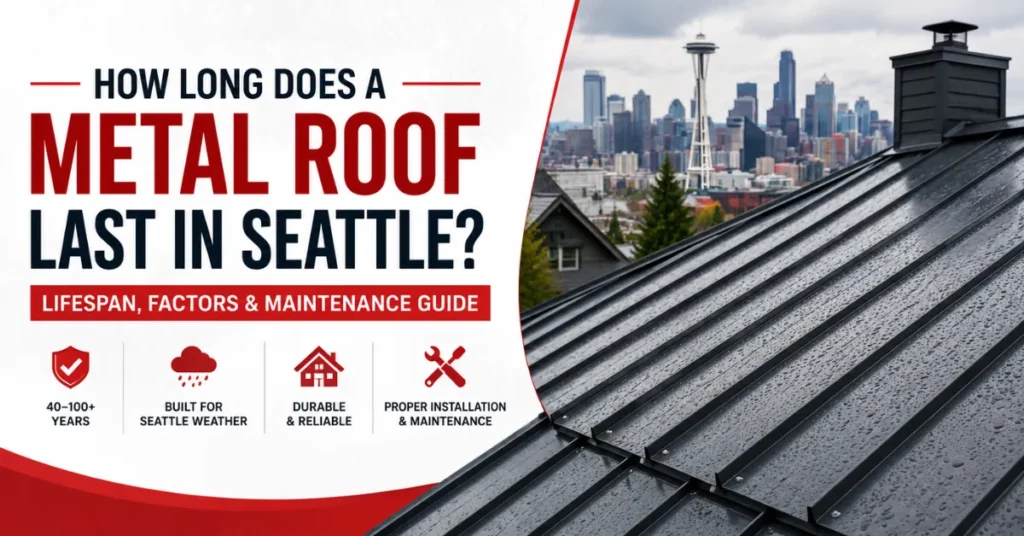
So, how long does a metal roof last in Seattle? On average, a well-installed metal roof can last anywhere from 40 to over 100 years, depending on the material. But metal roof lifespan in Seattle isn’t just about the material you choose installation quality, ventilation, and ongoing maintenance all play a major role in whether your roof hits the low end or high end of that range. This guide breaks down what to expect from Seattle metal roofing, the factors that influence longevity, and how to get the most life out of your investment.
Average Lifespan of a Metal Roof in Seattle
Different metal roofing systems are made from various materials, protective coatings, and installation methods, all of which influence how long does a metal roof last in Seattle wet climate. Choosing the right roofing system can significantly improve durability and long-term performance.
Lifespan by Material:
| Material | Average Lifespan |
|---|---|
| Steel Roofing | 40–70 Years |
| Aluminum Roofing | 50+ Years |
| Standing Seam Metal Roof | 50–80 Years |
| Copper Roofing | 80–100+ Years |
| Zinc Roofing | 80–100 Years |
Steel roofing panels offer a strong balance of cost and durability, while aluminum roofing performs especially well in wet climates thanks to its natural corrosion resistance. A standing seam metal roof known for its concealed fasteners and interlocking seams. It tends to outperform exposed-fastener systems because it minimizes potential leak points. At the premium end, copper roofing and zinc roofing can last a century or more, developing a protective patina that actually improves their weather resistance over time.
Why Metal Roofs Last Longer than Asphalt Shingles
When comparing metal roof vs asphalt shingles, the difference in longevity comes down to several core factors:
- Durability: Metal panels resist cracking, curling, and splitting, all common issues with aging shingles.
- Water resistance: Metal sheds water efficiently, while shingles can absorb moisture over time, especially in a rainy climate.
- Fire resistance: Metal roofing is naturally non-combustible, offering better fire-resistant roofing performance than asphalt.
- Wind resistance: Interlocking or mechanically fastened metal panels typically outperform shingles in high-wind conditions.
- Maintenance: Metal roofs require less frequent upkeep than shingle roofs, which often need patching or partial replacement.
- Replacement frequency: Asphalt shingles typically need replacement every 20–30 years, while metal roofing can go 40–80+ years before replacement is necessary.
These advantages make metal one of the most durable roofing materials and a leading choice among weather-resistant roofing options for the region.
Seattle Weather and Its Impact on Metal Roofing
Seattle’s wet climate plays a major role in how long does a metal roof last in Seattle. Frequent rainfall, moisture, wind, and seasonal debris can affect its performance, but a properly installed and well-maintained metal roof is designed to withstand these conditions and provide decades of reliable protection.
Heavy Rainfall
Seattle receives rain during a large portion of the year. Metal roofing’s smooth, sloped surface sheds water quickly, reducing the risk of pooling or prolonged moisture exposure that can damage other materials.
Moisture and Humidity
Persistent humidity can accelerate the breakdown of organic roofing materials, but metal panels particularly those with protective coatings — resist moisture absorption, making them well-suited to Pacific Northwest roofing conditions.
Windstorms
The region experiences periodic windstorms, especially in the fall and winter months. Properly installed metal roofing systems are engineered to withstand high wind uplift, reducing the risk of panel displacement.
Moss and Debris
Seattle’s damp, shaded environment is prone to moss growth, especially on roofs that stay wet for extended periods. Metal’s smooth surface makes it harder for moss to take root compared to the textured surface of asphalt shingles, though periodic cleaning is still recommended.
Altogether, these conditions explain why waterproof roofing and corrosion-resistant roofing systems like metal perform so well despite the area’s demanding weather, and why proper moisture protection during installation matters so much.
Factors That Affect How Long Does a Metal Roof Last
Several factors determine how long does a metal roof last in Seattle, from the type of roofing material and installation quality to routine maintenance and exposure to the city’s wet climate. Understanding these factors can help homeowners maximize their roof’s lifespan and protect their investment for decades.
Quality of Installation
Even the best materials will underperform if installed incorrectly. Professional metal roof installation with correct flashing, fastening, and sealing has the single biggest impact on how long a roof will actually last.
Roofing Material
As shown in the lifespan table above, material choice sets the baseline. Steel, aluminum, copper, and zinc all offer different combinations of cost, appearance, and longevity.
Roof Pitch
Roof pitch affects water runoff speed and the buildup of debris or standing moisture. Steeper roofs generally shed water faster, which can reduce long-term wear.
Ventilation
Adequate roof ventilation helps regulate temperature and moisture in the attic space, preventing condensation that could otherwise corrode the underside of metal panels over time.
Underlayment
Quality roofing underlayment acts as a secondary moisture barrier beneath the metal panels, offering extra protection against leaks if the outer layer is ever compromised.
Regular Maintenance
Routine roofing inspection in Seattle and upkeep clearing debris, checking sealant, tightening fasteners extends the functional lifespan of any metal roofing system.
Coastal Salt Exposure
For homes closer to Puget Sound, salt-laden air can accelerate corrosion on certain metals. Choosing a corrosion-resistant material and coating becomes especially important in these areas.
Signs Your Metal Roof Needs Repair or Replacement
Even long-lasting metal roofs eventually show signs of wear. Watch for:
- Loose fasteners can allow water infiltration and panel movement
- Rust spots often indicate a compromised protective coating
- Leaks may point to failed roof flashing or seam separation
- Damaged flashing a common source of water intrusion around chimneys, vents, and skylights
- Panel movement loose or shifting roofing screws can signal fastening issues
- Sealant deterioration cracked or worn sealant reduces the roof’s watertight seal
Catching these signs early supports leak prevention and can mean the difference between a simple metal roof repair in Seattle and a full roof leak repair or replacement.
How to Extend the Life of a Metal Roof in Seattle
A few consistent habits go a long way toward maximizing your roof’s lifespan:
- Schedule annual inspections to catch small issues early
- Stay on top of gutter maintenance to prevent water backup at the roofline
- Prioritize moss prevention through periodic cleaning or treatment
- Tighten loose fasteners as part of routine upkeep
- Replace damaged sealant around flashing and seams promptly
- Trim nearby trees to reduce debris accumulation and moisture retention
- Keep roof drainage systems clear of leaves and debris
If you are wondering how long does a metal roof last in Seattle, regular metal roof maintenance and routine roof inspections are key. Consistent upkeep helps prevent minor issues from becoming costly repairs, allowing your metal roof to reach or even exceed its expected lifespan.
Is a Metal Roof Worth the Investment in Seattle?
For many homeowners, the upfront cost of metal roofing is offset by long-term value:
- Lower lifetime costs — fewer replacements over the life of the home
- Energy savings — reflective coatings can reduce cooling costs
- Fewer repairs — durable materials mean less frequent maintenance spending
- Increased property value — metal roofing is often viewed as a premium upgrade by buyers
- Sustainability — many metal roofing materials are recyclable and made from recycled content
- Excellent ROI — the combination of longevity and reduced maintenance often makes metal one of the better long-term roofing investments
Between the energy-efficient roofing benefits and reduced long-term costs, residential metal roofing continues to be a strong option for homeowners planning a Seattle roof replacement with resale value in mind, and it’s also considered a leading eco-friendly roofing choice.
Cost vs Lifespan Comparison
| Roofing Material | Lifespan | Maintenance | Long-Term Value |
|---|---|---|---|
| Asphalt Shingles | 20–30 Years | Medium | Fair |
| Metal Roofing | 40–80 Years | Low | Excellent |
| Tile Roofing | 50–100 Years | Medium | High |
| Slate Roofing | 75–150 Years | Low | Premium |
When comparing roofing materials comparison data side by side, metal consistently stands out as one of the best roofing material Seattle homeowners can choose for a strong balance of cost, lifespan, and low maintenance — landing solidly among long-lasting roofing options without the premium price tag of slate or the higher maintenance needs of tile.
FAQs
How long does a metal roof last in Seattle?
Most professionally installed metal roofs in Seattle last between 40 and 80 years, with premium materials like copper and zinc lasting even longer.
Do metal roofs rust in Seattle?
Quality metal roofing materials are treated with protective coatings that resist rust and corrosion, even in Seattle’s wet climate. Aluminum, in particular, does not rust.
Does a metal roof require maintenance?
Yes, though maintenance needs are minimal compared to other roofing materials. Periodic inspections, gutter cleaning, and moss prevention are typically sufficient.
What type of metal roof lasts the longest?
Copper and zinc roofing typically offer the longest lifespans, often exceeding 80–100 years.
Can a metal roof increase home value?
Yes, metal roofing is often viewed as a premium, long-lasting upgrade that can positively impact resale value.
Conclusion
So, How Long Does a Metal Roof Last in Seattle, WA? Most professionally installed metal roofs in Seattle last 40 to 80 years or more, depending on the material and how well the system is maintained. While material choice sets the foundation, quality installation and consistent upkeep are what ultimately determine whether a roof performs at the lower or upper end of its expected lifespan.
For homeowners weighing their options, understanding metal roof lifespan Seattle conditions create and investing in a properly installed standing seam metal roof offers one of the most reliable paths to long-term, weather-resistant roofing performance. Partnering with an experienced Seattle roofing contractor like Epic Roofing and staying consistent with metal roof maintenance are the two factors most within a homeowner’s control, and together they can make all the difference in how long a metal roof truly lasts.