
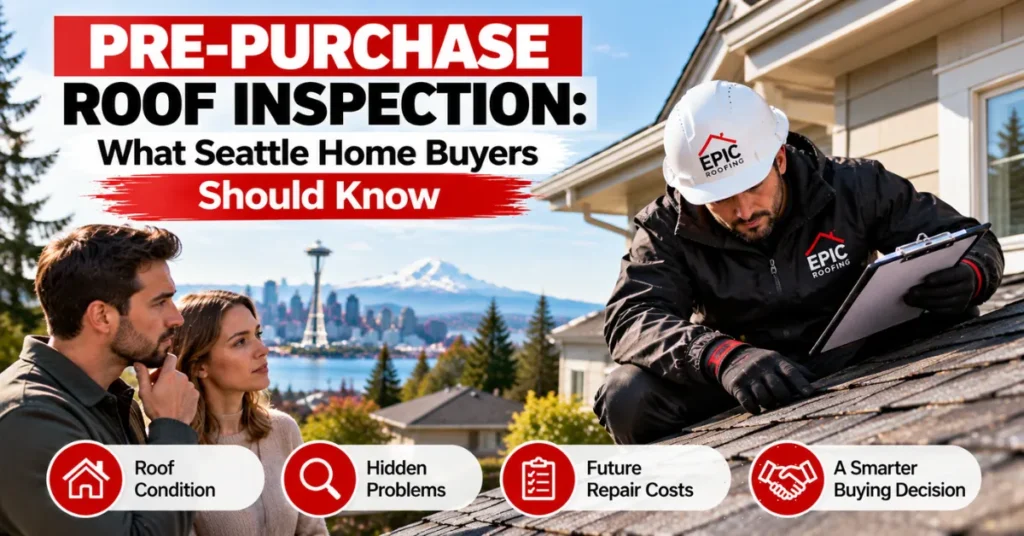
A pre-purchase roof inspection is a roof-only evaluation you order before closing on a home, so you know the roof’s condition, its remaining life, and what repairs are coming before you commit. It is written for buyers who want to avoid inheriting a surprise roof bill. In Seattle, where moisture, moss, and aging housing stock wear roofs down quietly, a general home inspection often gives the roof only a brief look. This guide explains when to order the inspection, what the roofer checks, how to read the findings, and how to use them in negotiations.
1. Do You Need a Roof Inspection Before Buying a House?
You need one if the roof is older than about 15 years, the home inspector flagged the roof, the seller has no repair records, or you plan to keep the home for years. A home inspector reviews every system in the house and may only view the roof from a ladder, the ground, or a drone. A roofer evaluates the roof as the main subject, including the attic.
The roof is also one of the costliest components you can inherit. Knowing the average lifespan of a residential roof helps you judge whether a listing’s roof is mid-life or close to replacement. A roof inspection turns that general number into a specific estimate for the actual house.
2. When to Schedule It
Schedule the roof inspection during your inspection window, not after. Your purchase agreement sets deadlines for inspections and for requesting repairs or price changes, and missing them can limit your options. Check the exact timeline with your agent or attorney.
A practical order of events:
- Book the home inspection as soon as your offer is accepted.
- If the home inspector flags the roof, or you already know it’s older, book the roofer immediately. Roofers can fill up after storms.
- Ask the listing agent for access to the attic and a clear hatch.
- Get the written report in time to negotiate before your deadline.
3. What a Roofer Checks That Matters to Buyers
The inspection covers the same core areas as any thorough roof evaluation, but buyers should focus on what drives future cost.
Remaining life. This is the number that matters most. Ask for an estimate in years, and ask what it assumes about maintenance.
Surface condition. Cracked, curled, or missing shingles, heavy granule loss, and exposed nails show how worn the surface is. Different materials fail differently, so the type of roof on the home changes what the inspector looks for.
Flashing and penetrations. Chimneys, vents, skylights, and valleys are the usual leak points. A failing chimney joint is common and fixable, as explained in our guide to chimney flashing repair, but you want it documented before closing.
Attic evidence. Stains, damp insulation, mold, daylight, and blocked ventilation reveal what the shingles hide. Ask whether the roofer entered the attic. If not, the inspection is incomplete.
Moss and drainage. Seattle roofs often carry moss on shaded slopes. Light moss may be cosmetic, but heavy growth can lift shingle edges and hold moisture against the surface. Clogged gutters and debris in valleys point to deferred maintenance.
Repair history. Patches, mismatched shingles, and sealant smeared around vents can mean a past leak. A roof with many patches is telling you the seller has been managing a problem.
4. Seattle-Specific Things to Watch For
Many Seattle neighborhoods have older homes, including Ballard, Capitol Hill, Queen Anne, and West Seattle. Older homes bring older roof conditions: multiple roofing layers, additions with different roof materials, and attics where insulation has been added over time. Added insulation often blocks soffit vents, which causes condensation and shortens shingle life.
Ask the roofer to check attic ventilation specifically. It is a common finding in older homes, and it affects both the roof’s lifespan and the home’s moisture levels. A condensation problem is often cheaper to fix than a leak, but you should know about it before you buy.
Also note shading. Homes surrounded by mature evergreens collect needles and moss faster. Ongoing maintenance will be part of ownership.
5. How to Read the Findings
Reports are most useful when they sort problems by urgency. Use this table to translate common findings into buyer decisions.
| Finding | What It Usually Means | Buyer Response |
|---|---|---|
| Minor wear, light moss, clean attic | Roof is aging normally | Budget for routine maintenance |
| Failing flashing or cracked vent boots | Likely or future leak points | Request repair or a credit before closing |
| Active stains or damp attic wood | Current water entry | Require repair and a follow-up inspection |
| Many patches or mismatched repairs | History of recurring leaks | Ask for repair records and a closer look |
| Widespread granule loss, curling, or cracking | Roof near end of life | Plan for replacement and negotiate price |
| Soft or sagging decking | Rot and structural damage | Get a full evaluation before proceeding |
6. Using the Report to Negotiate
A roof report gives you documented leverage instead of a vague concern. Depending on what it finds, buyers commonly ask for one of these:
- Seller repairs completed by a licensed roofer before closing, with receipts
- A repair credit so you can handle the work after purchase
- A price reduction that reflects a near-term replacement
- Additional evaluation if the findings are unclear or the damage looks serious
Keep the request specific. Attach the report, point to the photos, and ask for a defined remedy rather than a general complaint. If the roof needs replacement soon, run the numbers using our guides to roof repair costs in Seattle and roof replacement costs in Seattle. Both are estimate ranges, and your own quote will depend on the home.
If the roof is failing, understand your options before you respond. Roof replacement vs. roof overlay explains why layered roofs and damaged decking often push the decision toward full replacement. Walking away is also a legitimate choice when the findings are serious and the seller won’t engage.
7. Questions to Ask the Seller
Request these before or during your inspection window:
- How old is the roof, and was it installed or replaced by a contractor?
- Are there repair invoices, permits, or warranty documents?
- Has the roof ever leaked, and where?
- Have there been insurance claims involving the roof?
- Is any warranty transferable to a new owner?
Seller answers are not a substitute for an inspection, but gaps and inconsistencies are worth noting. Some insurers also ask about roof age and condition when you apply for coverage, so having an accurate report helps you plan.
8. Choosing the Roofer
Pick a licensed, insured local roofer who provides a written report with photos, not a verbal summary. Be cautious of free inspections tied to a sales pitch when you need unbiased documentation for a purchase. Our guide on how to find a reliable roofing company in Seattle covers vetting, and the questions to ask before hiring a roofer will help you compare options.
If you’re buying on the Eastside, local roofers are also available for roof inspections in Bellevue.
9. Get Your Pre-Purchase Roof Inspection From Epic Roofing
If you’re buying a Seattle home and want a clear answer on the roof before closing, Epic Roofing Company can evaluate the surface, flashing, and attic, explain what the findings mean, and outline realistic next steps. Learn more about our roof inspection services in Seattle, or contact us to schedule an inspection within your buying timeline.
Frequently Asked Questions
Is a roof inspection included in a regular home inspection?
Partly. A home inspector notes the roof’s visible condition, but a dedicated roof inspection goes deeper into flashing, attic conditions, and remaining life.
Who pays for the roof inspection when buying a house?
Buyers usually pay for inspections they order. Who pays for any resulting repairs is a negotiation with the seller.
How long does a pre-purchase roof inspection take?
Most homes take between 30 and 90 minutes on site, with the written report following afterward. Complex or steep roofs take longer.
Can a roof inspection be done on a home I don’t own yet?
Yes, with the seller’s permission, coordinated through the listing agent during your inspection period.
What if the roof is near the end of its life?
Ask for a price reduction or credit that reflects the cost of replacement, or reconsider the purchase if the budget doesn’t work.
Should I re-inspect after the seller makes repairs?
It’s wise for significant repairs. Ask for receipts and photos, or have a roofer confirm the work before closing.
Do metal roofs need a pre-purchase inspection too?
Yes. Metal lasts longer, but fasteners, seams, and coatings still wear. See how long a metal roof lasts in Seattle for typical expectations.
Conclusion
A pre-purchase roof inspection gives you what a general home inspection usually can’t: the roof’s remaining life, a clear view of the attic, and a list of repairs ranked by urgency. In Seattle, where moss, moisture, and older homes with blocked soffit vents are common, that detail can mean the difference between a routine maintenance budget and an unexpected replacement.
Book the inspection inside your inspection window, confirm the roofer enters the attic, and ask for a written report with photos. Then use the findings to request repairs, a credit, or a price reduction before you close.
If you’re buying a home in Seattle or on the Eastside, Epic Roofing Company can evaluate the roof and explain what the findings mean for your purchase. Contact us to schedule your inspection before your deadline.