

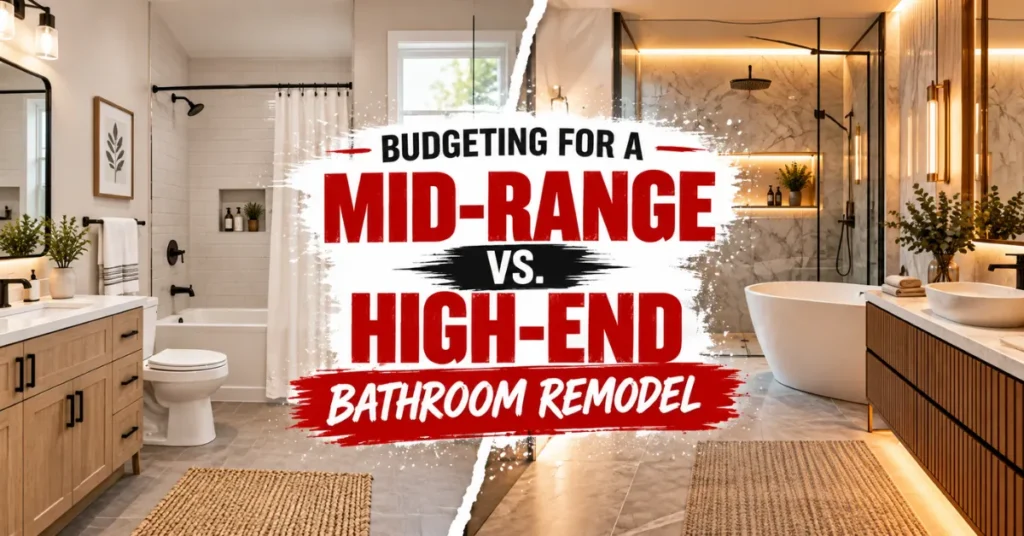
Planning a bathroom remodel starts with one important question: How much do you actually want to change?
A mid-range bathroom remodel may focus on improving the room’s appearance, functionality, and finishes without completely changing its layout. A high-end bathroom remodel usually goes further, incorporating premium materials, custom cabinetry, upgraded fixtures, larger showers, improved lighting, and more extensive structural or plumbing work.
The difference is not simply about choosing expensive products. Your bathroom remodel budget is influenced by the size of the room, layout changes, plumbing and electrical work, materials, fixtures, labor, ventilation, storage, and the level of customization you want.
For Seattle homeowners, remodeling plans also need to account for applicable permitting and code requirements. Seattle states that construction permits are generally required for remodeling and alteration projects, although certain smaller projects may qualify for exemptions or streamlined permitting depending on their scope.
Understanding the difference between a mid-range and high-end renovation can help you establish realistic priorities before selecting materials or requesting contractor estimates.
What Is a Mid-Range Bathroom Remodel?
A mid-range bathroom remodel typically focuses on upgrading an existing bathroom without completely rebuilding the space.
The basic layout may remain the same, while outdated finishes, fixtures, flooring, lighting, storage, and other visible components are replaced.
A mid-range project might include:
- New vanity and countertop
- Updated faucets
- New toilet
- New flooring
- New shower or tub surround
- Updated wall tile
- Modern lighting
- Fresh paint
- New mirrors
- Improved storage
- Updated exhaust fan
- New hardware
- Select plumbing or electrical improvements
The goal is usually to create a cleaner, more functional, modern bathroom without paying for extensive customization.
This can be a practical approach when the existing bathroom has a workable layout and the plumbing locations do not need major changes.
What Is a High-End Bathroom Remodel?
A high-end bathroom remodel generally involves more extensive customization and premium materials.
Rather than simply replacing existing finishes, homeowners may redesign the room around specific lifestyle preferences, architectural details, and higher-end fixtures.
A high-end renovation might include:
- Custom vanity cabinetry
- Premium stone countertops
- Large-format or specialty tile
- Custom tile patterns
- Walk-in shower
- Frameless glass enclosure
- Freestanding soaking tub
- Multiple shower fixtures
- Heated flooring
- Designer lighting
- Custom mirrors
- Built-in storage
- Upgraded ventilation
- High-end plumbing fixtures
- Smart bathroom technology
- Relocated plumbing
- Improved electrical systems
- Custom architectural details
The additional cost comes from a combination of materials, labor, customization, and project complexity.
A luxury bathroom does not necessarily need every available upgrade. The goal should be to spend more where the improvement actually matters to how you use the space.
Mid-Range vs. High-End Bathroom Remodel: What’s the Difference?
The biggest differences usually come down to materials, customization, layout changes, fixtures, and labor intensity.
| Feature | Mid-Range Remodel | High-End Remodel |
|---|---|---|
| Layout | Usually unchanged | May be redesigned |
| Vanity | Stock or semi-custom | Custom or premium |
| Countertop | Standard upgraded material | Premium stone or specialty surface |
| Tile | Standard ceramic or porcelain | Premium, specialty, or custom tile |
| Shower | Updated existing configuration | Custom walk-in or luxury shower |
| Tub | Standard replacement | Freestanding or premium tub |
| Fixtures | Quality standard fixtures | Designer/premium fixtures |
| Lighting | Updated fixtures | Layered/custom lighting |
| Flooring | Standard tile | Premium tile or heated flooring |
| Storage | Standard cabinets | Custom built-ins |
| Plumbing changes | Limited | More likely |
| Electrical work | Limited | More extensive |
| Customization | Moderate | High |
| Design complexity | Moderate | High |
Neither category is automatically better for every homeowner.
The right budget depends on the condition of the existing bathroom, your goals, how long you plan to stay in the home, and which improvements matter most to you.
Where Does a Bathroom Remodel Budget Go?
A bathroom remodeling budget is rarely spent on one single item.
Your overall investment can include:
Design and Planning
Planning determines the layout, materials, fixture locations, storage, lighting, and overall design direction.
More complex projects generally require more planning because multiple trades and components need to work together.
Demolition
Removing existing tile, cabinets, flooring, fixtures, drywall, or other materials creates labor and disposal costs.
A bathroom that looks simple on the surface can become more complicated once walls or floors are opened.
Plumbing
Keeping plumbing fixtures in their existing locations can simplify the project.
Moving a toilet, shower, tub, or sink can increase the amount of plumbing work required and may affect flooring, walls, drainage, and other components.
Electrical
Lighting, outlets, heated floors, exhaust fans, mirrors, and other electrical improvements can all affect the budget.
Electrical work should be planned rather than added as an afterthought.
Seattle requires an electrical permit when electrical wiring is installed, altered, extended, or connected to electrical equipment.
Tile and Flooring
Tile selection can have a major effect on both material and installation costs.
A simple rectangular tile pattern is generally less labor-intensive than intricate patterns, specialty layouts, numerous cuts, or detailed decorative work.
Fixtures
Faucets, toilets, shower systems, tubs, sinks, and other fixtures are available across a wide range of price points.
Choosing premium fixtures across the entire bathroom can quickly move a project toward a high-end budget.
Cabinetry and Storage
A stock vanity and a fully custom cabinet system are very different budget decisions.
Custom cabinetry can provide better use of awkward spaces and specific storage requirements, but it also adds design and fabrication considerations.
Finishing Work
Paint, trim, mirrors, hardware, caulking, accessories, and final detailing may represent a smaller part of the overall budget but can have a noticeable effect on the finished appearance.
Mid-Range Bathroom Remodel Budget
A mid-range bathroom remodel is often centered around updating the existing space without unnecessarily rebuilding it.
One of the most effective ways to control the budget is to keep the existing layout when it works.
For example, keeping the shower, toilet, and vanity in approximately the same locations can reduce the need for extensive plumbing modifications.
A practical mid-range scope might include:
- Replace vanity
- Install new countertop
- Replace faucet
- Upgrade toilet
- Replace flooring
- Install new shower tile
- Replace shower fixtures
- Upgrade lighting
- Install a new mirror
- Repaint walls
- Improve ventilation
- Replace hardware
This type of project can create a significant visual improvement without requiring every component to be custom-built.
How to Keep a Mid-Range Remodel on Budget
Start by identifying the elements that genuinely need replacement.
If the existing layout works, consider keeping it.
If the bathtub is structurally sound but visually outdated, for example, you may not need to redesign the entire bathroom around a new configuration.
You can also prioritize where to spend more.
A homeowner might choose a more attractive countertop and standard cabinetry, while another might prefer premium tile but a simpler vanity.
The important thing is to make those decisions before construction begins.
High-End Bathroom Remodel Budget
A high-end bathroom remodel is more likely to involve a combination of premium materials, custom design, specialized fixtures, and more complex construction.
The budget can increase substantially when several major components are upgraded at the same time.
For example:
Custom vanity + premium countertop + specialty tile + walk-in shower + frameless glass + heated flooring + upgraded lighting + relocated plumbing
creates a significantly different project from simply replacing an existing vanity and tile.
High-end remodeling is also more sensitive to design coordination.
Custom materials may require specific installation techniques, longer lead times, additional planning, and more detailed finishing work.
What Makes a Bathroom Remodel High-End?
It is not simply the price of the fixtures.
A high-end bathroom usually combines several characteristics:
- Better-quality materials
- Greater customization
- More detailed craftsmanship
- Improved functionality
- More complex lighting
- Premium fixtures
- Custom storage
- Higher-end finishes
- More extensive layout changes
The result should feel intentional rather than simply expensive.
How Tile Choices Affect Your Bathroom Remodel Budget
Tile is one of the areas where homeowners can dramatically change the appearance of a bathroom.
There are several factors to consider:
- Material
- Size
- Pattern
- Finish
- Installation complexity
- Number of cuts
- Accent areas
- Shower niches
- Edge details
- Waterproofing requirements
A large-format porcelain tile can create a clean contemporary appearance, while smaller tiles or decorative patterns can introduce more visual detail.
However, material cost is only part of the equation.
A complicated tile layout can require additional labor even when the tile itself is not exceptionally expensive.
For a mid-range remodel, a homeowner might choose attractive standard tile with a straightforward installation pattern.
For a high-end remodel, specialty tile, custom patterns, accent walls, niches, or large-format materials may become part of the design.
Vanity, Countertop, and Storage Costs
The vanity is often one of the most noticeable pieces of bathroom furniture.
A basic replacement may involve a pre-manufactured vanity with a standard countertop.
A higher-end project may use:
- Custom cabinetry
- Integrated storage
- Premium stone
- Double sinks
- Built-in electrical outlets
- Custom drawer configurations
- Specialty hardware
Storage should be planned according to how the bathroom is actually used.
A beautiful bathroom with insufficient storage can quickly become inconvenient.
Instead of adding cabinets simply because they look impressive, consider what needs to be stored and where those items should be accessed.
Shower and Tub Upgrades
The shower can become one of the largest design elements in a bathroom.
A mid-range renovation might replace the existing shower surround, fixtures, and door while maintaining the existing footprint.
A high-end renovation may introduce:
- Walk-in shower
- Frameless glass
- Multiple shower heads
- Handheld shower
- Built-in bench
- Recessed niche
- Linear drain
- Custom tile
- Rain shower
- Steam shower features
Changing the shower layout can require additional waterproofing, plumbing, framing, drainage, and tile work.
That is why a seemingly simple design change can have a larger effect on the overall remodeling budget.
Lighting, Electrical, and Ventilation
Bathroom lighting is often overlooked during budgeting.
A well-designed bathroom may use several layers of lighting:
Ambient Lighting
Provides general illumination throughout the room.
Task Lighting
Helps around the vanity and mirror.
Accent Lighting
Highlights architectural features, tile, shelving, or other design elements.
Ventilation is equally important.
Bathrooms produce significant moisture, so proper exhaust ventilation helps manage humidity and moisture generated during normal use.
If electrical wiring is being installed or altered, Seattle’s electrical permitting requirements need to be considered.
Should You Change the Bathroom Layout?
Layout changes can have one of the biggest effects on a remodeling budget.
Moving a vanity a short distance may be relatively straightforward in some situations, while relocating a toilet or shower can involve more extensive plumbing and construction.
Before changing the layout, ask:
- Does the current layout actually create a problem?
- Is there enough storage?
- Is the shower large enough?
- Is the toilet positioned efficiently?
- Is there enough clearance?
- Does the vanity work for the household?
- Could better lighting solve some usability issues?
- Would moving plumbing create enough benefit to justify the added work?
If the existing layout works reasonably well, keeping it can allow more of the budget to go toward visible upgrades.
If the layout is fundamentally inefficient, spending more on redesigning it may create a more meaningful long-term improvement.
Hidden Costs to Include in Your Bathroom Remodel Budget
One of the biggest mistakes homeowners make is budgeting only for visible materials.
A bathroom remodel can uncover conditions that were not obvious before demolition.
Potential additional costs can include:
- Damaged subfloor
- Water damage
- Mold or moisture-related issues
- Outdated plumbing
- Electrical corrections
- Framing repairs
- Poor previous installations
- Waterproofing problems
- Ventilation improvements
- Additional demolition
- Permit-related requirements
This does not mean every bathroom remodel will uncover hidden problems.
It simply means your budget should include a contingency allowance rather than assuming every existing surface will be perfect.
A contingency gives you more flexibility if an unexpected condition appears after demolition.
How to Build a Realistic Bathroom Remodeling Budget in Seattle
Seattle homeowners should consider both the desired design and the project’s regulatory requirements.
Seattle’s Department of Construction and Inspections states that remodeling and alteration projects generally require a construction permit, while some smaller projects may qualify for specific exemptions or alternative permit paths.
The exact requirements depend on the scope of work.
A bathroom project involving structural changes, plumbing modifications, electrical work, or other alterations should be reviewed against the applicable requirements rather than assuming that every bathroom renovation falls under the same rules.
A good budgeting process is:
Step 1: Establish the Scope
Decide whether you are updating finishes or fundamentally changing the room.
Step 2: Decide Whether the Layout Will Change
This can have a significant effect on construction complexity.
Step 3: Select Your Priority Upgrades
Choose the features that matter most.
Step 4: Separate Must-Haves From Nice-to-Haves
This gives you flexibility when quotes come back higher than expected.
Step 5: Choose Materials Before Construction
Last-minute material changes can create delays and budget changes.
Step 6: Include a Contingency
Do not allocate every dollar to planned finishes.
Step 7: Get a Detailed Proposal
Your contractor should explain what is included in labor, materials, demolition, disposal, permits, and other project components.
For broader renovation planning, see our guide on how to plan a home renovation budget in Seattle.
Where to Spend More on a Bathroom Remodel
Not every upgrade provides the same value to every homeowner.
For many projects, it makes sense to prioritize things that are difficult or expensive to change later.
These may include:
Waterproofing:
The systems behind the visible tile are critical to the long-term performance of a shower.
Plumbing:
If plumbing needs to be upgraded or relocated, doing it during the renovation can be more practical than postponing it.
Ventilation:
Proper moisture management is important in a bathroom.
Electrical infrastructure:
Plan outlets, lighting, switches, and other electrical needs before walls are closed.
Quality installation:
Even expensive materials can perform poorly when installed incorrectly.
Premium decorative finishes can be changed later more easily than concealed construction.
Where to Save Money on a Bathroom Remodel
Saving money does not necessarily mean choosing the cheapest materials.
Some of the most effective budget decisions involve reducing unnecessary construction complexity.
Consider:
Keep the Existing Layout
If it works, there may be little reason to relocate every fixture.
Use Standard Sizes
Custom dimensions can increase fabrication and installation costs.
Limit Specialty Tile
Use decorative tile strategically instead of covering every surface with expensive specialty material.
Choose One Feature Upgrade
Instead of upgrading everything, make one or two elements the focal point.
For example, you could prioritize a custom shower while choosing simpler finishes elsewhere.
Reuse What Still Works
Not every existing component necessarily needs to be removed.
A professional evaluation can help determine what can reasonably remain.
Mid-Range vs. High-End Bathroom Remodel: Which Fits Your Goals?
The right approach depends on what you want the renovation to accomplish.
A mid-range remodel may be appropriate when:
- The layout already works
- Major plumbing is functional
- You want modern finishes
- You want to control construction complexity
- The goal is an attractive functional update
A high-end remodel may make sense when:
- You want a highly customized space
- The existing layout needs significant improvement
- Premium materials are important
- You plan to stay in the home for many years
- Accessibility or lifestyle features require customization
- You want a more comprehensive transformation
The distinction is not simply about how much you spend.
A carefully planned mid-range bathroom can be more functional and visually successful than an expensive renovation without a clear design strategy.
Common Bathroom Remodeling Budget Mistakes
Budgeting Only for Materials
Materials are visible, but labor, demolition, disposal, preparation, waterproofing, plumbing, electrical work, and finishing can also represent significant parts of the project.
Changing the Layout Without Understanding the Cost
Moving plumbing can create additional work beyond the fixture itself.
Choosing Materials Too Late
Late selections can cause ordering problems, substitutions, and schedule changes.
Ignoring Ventilation
A beautiful bathroom still needs effective moisture management.
Spending Everything on Finishes
Leave room for construction requirements and unexpected conditions.
Comparing Contractor Quotes Only by Total Price
A lower quote may include fewer services or lower-grade materials.
Compare the actual scope of work.
Forgetting Permits
Seattle explains that most construction projects require permits, although specific exemptions exist.
Do not assume a bathroom remodel is automatically exempt simply because it is inside the home.
Choosing Fixtures Before Planning the Space
A fixture should fit the layout, clearances, plumbing configuration, and overall design.
How to Compare Bathroom Remodeling Contractor Estimates
When reviewing estimates, look beyond the final number.
Check whether each proposal clearly addresses:
- Demolition
- Disposal
- Materials
- Labor
- Plumbing
- Electrical
- Tile installation
- Waterproofing
- Flooring
- Cabinet installation
- Painting
- Ventilation
- Fixtures
- Permits
- Cleanup
- Contingency or allowances
- Warranty
Two contractors can provide different prices because they are proposing different scopes.
A detailed written estimate makes those differences easier to identify.
If you are considering a larger home renovation alongside the bathroom project, our home remodeling contractor services can be used as a starting point for planning the broader scope.
FAQs
What is considered a mid-range bathroom remodel?
A mid-range bathroom remodel typically updates finishes, fixtures, flooring, lighting, storage, and other components while keeping much of the existing layout intact.
What makes a bathroom remodel high-end?
A high-end bathroom remodel generally involves more customization, premium materials, upgraded fixtures, custom cabinetry, specialized lighting, luxury shower features, and potentially more extensive plumbing or electrical work.
Is a high-end bathroom remodel worth the extra cost?
That depends on your goals, how long you plan to stay in the home, and which improvements matter to you. A high-end remodel can provide more customization and premium finishes, but not every homeowner needs those features.
What is the biggest factor affecting bathroom remodeling cost?
The biggest cost drivers can include the size and condition of the bathroom, labor, materials, layout changes, plumbing, electrical work, tile installation, cabinetry, fixtures, and project complexity.
Does moving plumbing make a bathroom remodel more expensive?
It can. Moving plumbing may require additional demolition, piping, drainage work, flooring repairs, and other construction. Keeping fixtures in their existing locations can reduce project complexity when the current layout works.
How much should I budget for unexpected bathroom remodeling costs?
Instead of allocating your entire budget to planned materials and labor, include a contingency for unexpected conditions. The appropriate amount depends on the age and condition of the home and the scope of demolition.
Do bathroom remodels require permits in Seattle?
Many remodeling and alteration projects in Seattle require permits, although certain smaller projects may qualify for exemptions or alternative permit paths. The requirements depend on the specific scope of work.
Do electrical changes require a permit in Seattle?
Seattle states that an electrical permit is required when electrical wiring is installed, altered, extended, or connected to electrical equipment.
Should I spend more on materials or labor?
Both matter. High-quality materials will not perform as intended if installation is poor, while excellent workmanship cannot compensate for unsuitable materials. A balanced budget should account for both.
How can I keep a bathroom remodel within budget?
Define the scope before construction, keep the existing layout where practical, prioritize must-have improvements, select materials early, compare detailed contractor proposals, and maintain a contingency for unexpected work.
Conclusion
The difference between a mid-range vs. high-end bathroom remodel is not simply the amount of money spent.
It comes down to the scope of work, materials, customization, layout changes, fixtures, installation complexity, and the level of finish you want.
A mid-range remodel can deliver a substantial improvement while keeping the existing layout and using carefully selected materials. A high-end renovation can provide a more customized experience with premium finishes, sophisticated lighting, upgraded fixtures, custom storage, and more extensive construction.
For Seattle homeowners, the smartest approach is to establish the scope first, identify your priorities, account for potential hidden conditions, and verify applicable permitting requirements before construction begins. Seattle’s current guidance notes that remodeling and alteration projects generally require permits, with specific exceptions and permit pathways depending on the work.
The best bathroom remodeling budget is not necessarily the largest one. It is the one that puts your money into the improvements that matter most to how you use the space.
For a complete bathroom renovation, you can also explore our kitchen and bathroom renovation services.