

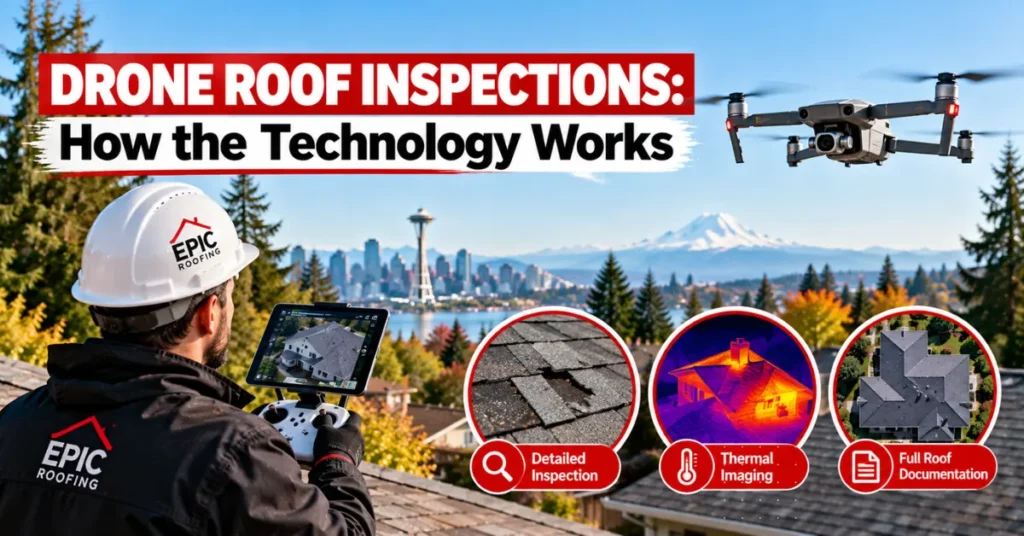
A drone roof inspection uses a small camera-equipped aircraft to photograph a roof from above, so an inspector can examine every slope without walking on it. It is useful for steep, tall, wet, or fragile roofs, and the images double as a record of the roof’s condition. A drone cannot do everything, though. It sees the surface well but cannot feel soft decking, test flashing by hand, or look inside the attic. This guide explains how the technology works, what the cameras can and cannot detect, how Seattle’s weather and airspace affect flights, and when a drone is the right choice.
Key Points
- A drone inspection photographs the roof surface from above, so no one has to walk on it.
- It is best for steep, tall, fragile, or wet roofs and for fast post-storm documentation.
- Zoom cameras capture close detail, and thermal sensors can hint at trapped moisture.
- Thermal results are clues that need confirming, and work best on flat or low-slope roofs.
- Drones cannot test decking, check the attic, or confirm hidden damage on their own.
- Seattle rain, wind, trees, and nearby airspace can limit when and how flights happen.
- The best inspections combine drone imagery with hands-on and attic checks.
What Is a Drone Roof Inspection?
A drone roof inspection is a roof evaluation in which a pilot flies an unmanned aircraft over the property and captures high-resolution photos or video of the roofing surface. An inspector then reviews the images for damage, wear, and moisture indicators, and writes up the findings.
The main benefit is access and safety. A drone reaches ridges, steep pitches, and rooflines that are risky to walk, without adding foot traffic to brittle or slick materials. It also produces a visual record you can compare against future inspections. It is one method within a broader roof inspection, not a separate kind of roof evaluation.
1. How a Drone Inspection Works, Step by Step
The process is simple, but each stage affects the quality of the result.
Pre-flight planning. The pilot checks the weather, the property layout, nearby obstacles such as trees and power lines, and whether the airspace requires authorization. They also confirm what the client needs, such as a routine check, a storm assessment, or documentation for a sale.
The flight. The pilot flies a controlled pattern over the roof. Most operators capture wide shots first to show the full roof, then fly closer to record detail on flashing, vents, chimneys, valleys, and any suspicious areas. Photos are taken from consistent angles so slopes can be compared.
Image review. Back on the ground, the inspector zooms in on the images and looks for the same defects a walk-on inspection would target: missing or lifted shingles, cracked or curled edges, granule loss, damaged flashing, debris, and moss. Good images let the inspector see small details without stepping on the roof.
Reporting. The findings are labeled, annotated, and summarized. Some providers also stitch photos into a single overhead map or a 3D model, which helps measure roof areas and track changes over time.
2. The Sensors Behind the Images
The camera matters as much as the aircraft. Drone inspections generally use one or more of these tools.
Standard high-resolution camera. This is the workhorse. It captures clear, detailed images of the roof surface and is enough for most visual assessments.
Optical zoom. A zoom lens lets the drone stay at a safe distance while capturing close detail on a chimney joint, a vent boot, or a cracked shingle. This is useful near trees and tight rooflines where flying close is unsafe.
Thermal (infrared) camera. A thermal sensor detects differences in surface temperature. Wet roofing material and insulation hold and release heat differently from dry areas, so a thermal image can point to trapped moisture that is invisible in a normal photo. Thermal data is a clue, not a diagnosis. It works best on flat and low-slope roofs under the right conditions, and the findings usually need to be confirmed with a hands-on check or moisture probe.
3. What Drones See Well and What They Miss
| Roof Item | Drone Performance | Why |
|---|---|---|
| Missing, lifted, or displaced shingles | Strong | Clearly visible from above in good light |
| Overall surface condition and moss | Strong | Full-roof views show patterns across slopes |
| Chimney, vent, and skylight exteriors | Good | Zoom captures detail, but sealant condition can be hard to judge |
| Gutters and debris in valleys | Good | Easy to see from above, though inside edges can be hidden |
| Possible trapped moisture (thermal) | Limited | Shows temperature differences that need confirmation |
| Soft or spongy decking | Cannot detect | Requires physical contact or attic inspection |
| Attic stains, mold, and ventilation | Cannot detect | Drones do not inspect the interior |
| Fine cracks, loose fasteners, brittle material | Limited | Small defects may not show in photos |
The pattern is clear. Drones excel at surface-level visual evidence and struggle with anything that depends on touch or the interior of the roof system.
4. Drone vs. Hands-On Inspection
A drone and a walk-on inspection answer different questions. The drone answers “what does the whole surface look like?” The hands-on check answers “what is happening underneath and at the joints?”
Flashing is a good example. A drone can show a chimney’s overall condition and flag a visible gap, but judging dried sealant, rust, or a loose edge often takes a closer look. Our guide to chimney flashing repair shows why these small joints cause so many leaks. Roofing material also matters. Some materials are fragile or slippery, which is where a drone helps most, and the type of roof you have often determines which method is safer.
For most homes, the best approach combines both: a drone for access and documentation, plus a hands-on check where safe and an attic review from inside. A drone-only inspection can be appropriate for a quick visual check or an unsafe roof, but it should be described honestly as a surface review.
5. Drone Inspections in Seattle: Weather, Airspace, and Terrain
Seattle conditions shape how and when drones can be used.
Rain and wind. Most small drones cannot fly safely in steady rain or strong wind, and wet lenses reduce image quality. Between fall and spring, operators wait for a dry window, which can affect scheduling. Booking early, before storm season, helps.
Overcast skies. Soft, even light is actually helpful for regular photos because it reduces glare on shingles. It is less helpful for thermal work, which typically depends on a roof absorbing sun and then releasing heat. Thermal results in a gray Seattle winter are generally less reliable.
Trees and terrain. Mature evergreens, hillsides, and dense neighborhoods such as Ballard, West Seattle, and Queen Anne can limit safe flight paths and block views of parts of the roof. A good pilot plans around them and may use zoom instead of flying close.
Nearby airspace. Parts of the Seattle area sit near controlled airspace around busy airports, and commercial drone flights there may need authorization before takeoff. A qualified operator checks this in advance.
6. Rules and Safety
Drone inspections done for a business are generally regulated by the Federal Aviation Administration. Commercial pilots in the United States typically need a remote pilot certificate under the FAA’s Part 107 rules, and they must follow airspace and flight restrictions. Requirements can change, so it is reasonable to ask any provider whether the pilot is certified and insured.
Privacy is the other consideration. Drones capture images of everything in view, including neighboring yards. A responsible operator focuses on your roof, avoids unnecessary capture of neighboring property, and explains how images are stored and shared. If you live in a dense neighborhood, it is courteous to tell neighbors before a flight.
7. When a Drone Makes the Most Sense
A drone is a strong choice when:
- The roof is steep, tall, or complex, and walking it adds risk
- The roofing material is fragile or easily damaged by foot traffic
- Surfaces are wet or slick and a walk-on inspection would be unsafe
- You want a fast documented overview after a windstorm, which can support a claim through a storm damage inspection
- A large flat or low-slope roof needs surveying, as on many commercial buildings
Property managers with large roofs can read more on our commercial roofing services in Seattle. A drone is less suited to cases where the main concern is inside the building, such as a ceiling stain or suspected attic moisture. Those need a person in the attic.
8. What the Report Should Include
The images are only useful if they are organized and explained. A drone inspection report should include:
- Labeled, dated photos showing location on the roof, with wide and close-up views
- A summary of findings by area: surface, flashing, penetrations, gutters, and debris
- Notes on limits, such as areas that could not be seen and anything that needs a hands-on check
- Repair recommendations ranked by urgency
- Thermal images, if used, with a clear explanation of what they do and do not prove
Be cautious of reports that are only a folder of photos with no analysis, or that claim a drone alone confirmed hidden moisture or structural condition.
9. Choosing an Inspector
Ask what method will be used, who is flying, whether the pilot is certified and insured, and whether the inspection includes the attic and any hands-on checks. Compare the written scope, not only the price. Our guide on how to find a reliable roofing company in Seattle covers vetting, and the questions to ask before hiring a roofer will help you compare options. Eastside homeowners can also see our roof inspection page for Bellevue.
If you want to know which inspection method fits your roof, Epic Roofing Company can evaluate its condition and explain the practical next steps, whether that means a surface review, a hands-on check, or both. Learn more about our roof inspection services in Seattle, or contact us to schedule an inspection. If the findings point to repairs, our roof repair services in Seattle cover the next step.
Frequently Asked Questions
Is a drone roof inspection as accurate as a walk-on inspection?
For surface conditions, it can be very good. It cannot test decking by touch, check the attic, or confirm hidden moisture on its own, so accuracy depends on what you need checked.
Can a drone find a roof leak?
Not directly. It can show missing shingles, damaged flashing, or thermal patterns that suggest moisture, but locating a leak usually means checking the attic and the roof joints.
Can a drone inspect a roof in the rain?
Generally no. Rain and strong wind make flights unsafe and reduce image quality, so inspectors wait for a dry window.
Will a drone inspection show up in an insurance claim?
The photos can serve as documentation, especially after a storm. Insurers decide what they accept, so check your policy and keep the dated images.
Does a drone replace the need to go into the attic?
No. The attic reveals stains, mold, damp insulation, and ventilation problems that no aerial image can show.
Is it legal to fly a drone over my house for an inspection?
Commercial flights follow FAA rules, and the operator should hold the required certification and check airspace. As the owner, you can authorize the inspection of your own property.
Can thermal imaging be done on any roof?
It can be attempted, but results are most reliable on flat or low-slope roofs under the right conditions. On steep shingle roofs in cloudy weather, thermal data is limited and should be confirmed.
Conclusion
A drone is one of the most useful tools in a modern roof inspection, but it is a tool, not a verdict. It gives you safe access, a full view of every slope, and dated images you can keep on file. It cannot feel soft decking, confirm hidden moisture on its own, or see what the attic is showing. For most Seattle homes, the best result comes from pairing aerial imagery with a hands-on check and an attic review.
Ask what method will be used, whether the pilot is certified and insured, and whether the report explains what the images do and do not prove. If your roof is steep, fragile, or hard to reach, a drone may be the safest place to start.
If you want help deciding which inspection method fits your roof, Epic Roofing Company can evaluate its condition and explain the practical next steps. Contact us to schedule an inspection.