
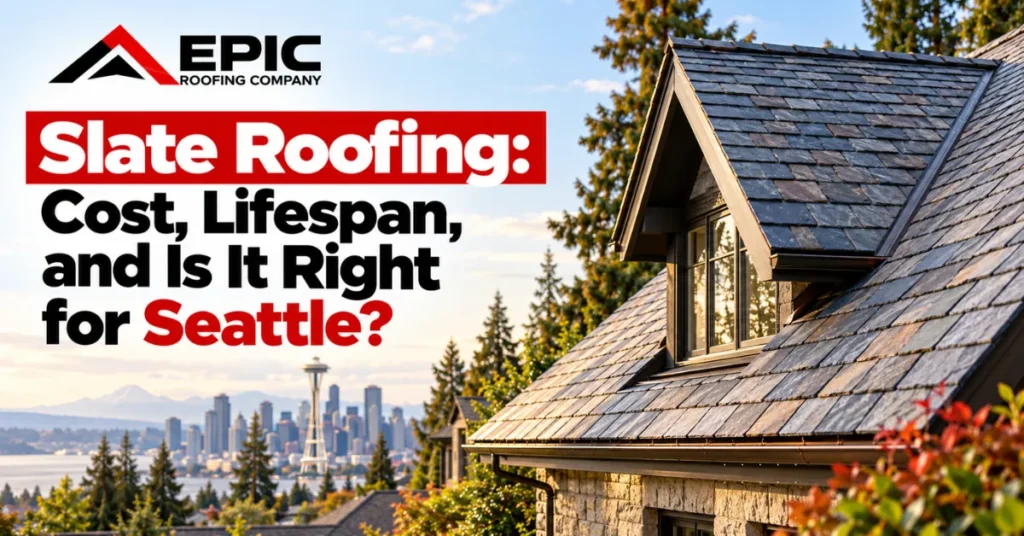
Slate roofing is known for its natural beauty, exceptional durability, and long service life. For Seattle homeowners, it can be an attractive option because it offers a classic appearance and can perform well in a climate with frequent rain. However, natural slate is also one of the heaviest and most expensive roofing materials available.
Before choosing slate, it is important to understand how much it costs, how long it lasts, whether your home’s structure can support it, and what maintenance it needs in the Pacific Northwest.
Natural slate can last 60 to 125 years or longer when properly installed and maintained. Its longevity makes it appealing for homeowners planning to stay in their property for decades. Still, slate is not the right choice for every home. Structural capacity, roof design, installation expertise, and budget all matter.
Key Points:
- Can last for decades with proper installation and maintenance.
- Resists fire and many weather conditions.
- Heavy weight may require structural assessment.
- Higher material and installation costs than many roofing options.
- Can crack under improper foot traffic.
- Repairs should be handled by experienced roofing professionals.
- Suitable for Seattle when the roof structure, drainage, and installation are appropriate.
What Is Slate Roofing?
Slate roofing is made from thin pieces of natural stone that are split or cut into roofing tiles. These tiles are installed in overlapping courses across a roof deck to create a durable, water-shedding surface.
Natural slate forms through geological processes that transform sedimentary rock under heat and pressure. The result is a dense stone that can be split into relatively thin sheets suitable for roofing.
Slate roofs are often found on historic homes, high-end residential properties, and buildings where long-term durability and architectural character are priorities.
Unlike asphalt shingles, which are manufactured from layers of materials, natural slate is stone. Its color and texture come from the mineral composition of the rock, giving each roof a distinctive appearance.
Slate roofing systems also include components that may not last as long as the stone itself. These include underlayment, flashing, fasteners, and the roof deck. Even when the slate remains in good condition, these supporting components may eventually require repair or replacement.
How Much Does a Slate Roof Cost in Seattle?
Slate roofing is a premium investment. The total cost depends on the type of slate, roof size, pitch, structural requirements, removal of the existing roof, and the experience of the installation contractor.
For planning purposes, natural slate installation can commonly fall around $20 to $35 per square foot or more, depending on the project. Some Seattle-area projects may cost considerably more when the roof is large, steep, difficult to access, or requires structural reinforcement.
These figures are broad estimates, not a quote for your property. Local pricing can vary, and the most useful way to compare costs is to request an itemized estimate based on your actual roof measurements and conditions.
What Affects Slate Roof Installation Cost?
Roof size and layout
A larger roof requires more slate, more fasteners, and more installation time. Roofs with multiple valleys, dormers, hips, and complex intersections also require additional cutting and detailing.
Type and grade of slate
Natural slate is available in different grades, thicknesses, colors, and sources. Premium slate may cost more because of its appearance, consistency, availability, or expected durability.
Roof pitch and access
Steep roofs require additional safety equipment and careful installation methods. Limited access can also increase labor time and material handling costs.
Structural reinforcement
Natural slate is heavy. Some homes may require structural evaluation or reinforcement before installation. This is an important cost consideration because the existing roof framing may not have been designed to carry the weight of slate.
Removal of the existing roof
Removing old shingles or other roofing materials can add labor, disposal, and preparation costs. The condition of the roof deck may also affect the final estimate.
Underlayment, flashing, and detailing
A slate roof is more than the visible stone tiles. Proper underlayment, flashing, valleys, ridge details, and fastening systems are essential to the roof’s performance. These components should be included in a complete proposal.
Is Slate Roofing More Expensive Than Asphalt Shingles?
Yes. Natural slate generally has a much higher initial cost than asphalt shingles.
However, comparing roofing materials only by their installation price can be misleading. Asphalt shingles may need replacement several times during the period a natural slate roof remains serviceable.
A better comparison considers the initial installation, expected service life, maintenance, repairs, and the possibility of replacing supporting components over time.
For homeowners planning to remain in their property for many decades, slate may offer long-term value. For homeowners with a limited budget or plans to move sooner, a more affordable roofing system may be more practical.
How Long Does a Slate Roof Last?
A properly installed natural slate roof can last 60 to 125 years or longer, depending on the slate type, installation quality, roof design, and maintenance. Some hard-slate roofs have remained in service for well over a century.
The National Park Service notes that slate longevity varies according to the type of slate, roof configuration, and location. Some installations have lasted more than 200 years.
Slate’s long lifespan is one of its biggest advantages. However, it is important to distinguish the lifespan of the stone from the lifespan of the complete roofing system.
What Can Shorten a Slate Roof’s Lifespan?
Several factors can affect how long a slate roof performs:
- Poor installation or incorrect fastening
- Low-quality or unsuitable slate
- Damaged or deteriorating flashing
- Failed underlayment
- Corroded fasteners
- Cracked or slipped slate tiles
- Impact from falling branches or other debris
- Neglected maintenance
- Problems with the roof deck or supporting structure
In Seattle, persistent moisture and organic debris can also make routine inspections important. Moss may grow on roof surfaces, particularly in shaded areas, but aggressive cleaning methods can damage slate.
The stone may remain durable while other components need attention. This is why a slate roof should be evaluated as a complete roofing system rather than judged only by the condition of its visible tiles.
Is Slate Roofing Suitable for Seattle’s Climate?
Slate can be a suitable roofing material for Seattle and the broader Pacific Northwest. Its durability and water-shedding design can work well in a climate with frequent rainfall.
However, suitability depends on the quality of the slate, roof design, installation, drainage, and maintenance.
How Slate Performs in Seattle Rain
Slate tiles overlap to direct water down the roof and toward the drainage system. When installed correctly, the roof can provide long-term protection against rain.
The underlayment and flashing are especially important. Water can enter through poorly detailed valleys, chimneys, skylights, and roof penetrations even when the slate itself is in good condition.
Seattle homeowners should pay attention to these areas during roof inspections.
Moss and Organic Growth
Seattle’s damp climate can encourage moss and other organic growth on shaded roof surfaces.
Slate is durable, but it is not immune to damage caused by improper moss removal. Pressure washing, aggressive scraping, or harsh chemicals may crack tiles, disturb fasteners, or damage the roof’s surface.
Moss management should be handled carefully, with methods appropriate for the slate and the roof’s condition.
Wind and Falling Branches
Slate can perform well in wind when properly installed and fastened. However, individual tiles may crack or become displaced due to impact, deteriorated fasteners, or installation problems.
Homes surrounded by mature trees should receive periodic inspections, especially after significant windstorms.
Freeze-Thaw Conditions
Some slate types are more resistant to moisture absorption and freeze-thaw cycles than others. Choosing suitable slate is important in regions where temperatures occasionally drop below freezing.
A qualified slate roofing professional should evaluate the material’s suitability for the property’s exposure and local conditions.
Natural Slate vs. Synthetic Slate Roofing
Homeowners who like the appearance of slate but are concerned about its weight or cost may consider synthetic slate.
Synthetic slate is manufactured from materials such as recycled polymers, rubber, or composite blends. It is designed to replicate the appearance of natural stone while offering different installation and performance characteristics.
| Feature | Natural Slate | Synthetic Slate |
|---|---|---|
| Material | Natural stone | Manufactured composite or polymer |
| Appearance | Authentic stone texture and variation | Designed to imitate natural slate |
| Weight | Heavy; structural review may be necessary | Usually lighter |
| Initial Cost | Generally higher | Often lower than natural slate |
| Lifespan | Commonly 60–125+ years, depending on slate and installation | Varies by product; follow manufacturer specifications |
| Installation | Requires specialized slate roofing experience | Requires product-specific installation |
| Repairs | Individual tiles can often be replaced | Repair method depends on product |
| Best Suited For | Long-term durability and authentic appearance | Slate-like appearance with reduced weight |
Synthetic slate is not automatically the better choice. Product quality, manufacturer requirements, warranty terms, and installation details matter.
Before choosing either option, ask for product specifications, expected service life, maintenance recommendations, and warranty information.
Advantages of Slate Roofing
| Advantage | What It Means for Homeowners |
|---|---|
| Exceptional Longevity | Natural slate can last for generations when the material and installation are appropriate. Its long service life is one of the main reasons homeowners choose it despite the higher upfront cost. |
| Distinctive Appearance | Slate offers a natural appearance that can complement traditional, historic, and high-end residential architecture. Its color and texture create a look that manufactured roofing materials may not fully replicate. |
| Fire Resistance | Natural slate is stone and is non-combustible. This can be an important consideration when comparing roofing materials, although the fire performance of the complete roof system also depends on other components. |
| Lower Material Replacement Frequency | A slate roof may not need full material replacement as often as shorter-lived roofing systems. This can reduce the frequency of major roofing projects over the life of the home. |
| Individual Tile Repairs | When damage is localized, individual slate tiles can often be replaced without removing the entire roof. Repairs must be completed carefully to avoid damaging adjacent tiles and the surrounding roofing system. |
Disadvantages of Slate Roofing
| Disadvantage | What Homeowners Should Know |
|---|---|
| High Initial Investment | Slate usually costs substantially more than asphalt shingles. The material, specialized labor, roof preparation, and possible structural work can make the project expensive. |
| Significant Weight | Natural slate is heavy. A structural assessment may be necessary to determine whether the home’s framing can support the roof safely. Do not assume that a roof can support slate simply because it currently supports another roofing material. |
| Specialized Installation | Slate roofing requires specific installation knowledge. Improper fastening, incorrect tile spacing, poor flashing details, or careless handling can cause problems that undermine the material’s long lifespan. |
| Fragile Underfoot | Slate is durable against weather but can crack if walked on incorrectly. Homeowners should not climb onto a slate roof for inspection or maintenance. |
| Repairs Can Be More Complicated | Replacing a broken slate tile may be straightforward for an experienced slate roofer, but the work requires specialized tools and careful handling. Repairs can be more expensive than those for common asphalt shingles. |
How to Maintain a Slate Roof in Seattle?
Slate roofs generally require less frequent material replacement than many other roofing systems, but they still need periodic inspection and maintenance.
Schedule Periodic Roof Inspections
A professional inspection can identify cracked or slipped tiles, damaged flashing, drainage problems, and deterioration in supporting components.
Inspections are especially useful after major windstorms or when you notice signs of water intrusion inside the home.
Keep Gutters and Drainage Clear
Leaves, branches, and other debris can obstruct gutters and downspouts. Poor drainage can cause water to back up or overflow near the roof edge.
Keep drainage systems clear using safe methods or a qualified professional.
Monitor Moss Carefully
Moss can be common on Seattle roofs, especially in shaded areas. Avoid pressure washing or aggressive scraping, which may damage slate.
Ask a professional familiar with slate about suitable moss management methods for your roof.
Repair Damaged Slate Promptly
Cracked, missing, or slipped tiles can create openings for water. Addressing localized damage early may help prevent moisture from reaching the roof deck or interior.
Inspect Flashing and Underlayment
Flashing around chimneys, skylights, valleys, and roof penetrations is essential to water protection. These components may need repair or replacement before the slate itself reaches the end of its service life.
Slate Roof Repair vs. Replacement
A damaged slate roof does not automatically need to be replaced.
If the slate remains in good condition and the damage is limited to a few tiles or a specific flashing area, a targeted repair may be the practical solution.
A more extensive restoration or replacement may be appropriate when damage is widespread, the roof deck has deteriorated, or the supporting components have reached the end of their useful life.
A professional evaluation should consider:
- The condition and type of slate
- The number of cracked, missing, or slipped tiles
- The condition of the fasteners
- Flashing and underlayment condition
- Roof deck and structural condition
- Whether matching replacement slate is available
- The estimated remaining service life
For a roof with localized damage, roof repair in Seattle may be sufficient. If the roofing system has widespread deterioration, roof replacement in Seattle may be worth evaluating.
The right decision depends on the roof’s actual condition not simply its age.
Is Slate Roofing Right for Your Seattle Home?
Slate roofing may be a good choice if you value long-term durability, natural stone appearance, and a roofing material that can remain in service for generations.
It may be particularly suitable for homeowners who plan to stay in their homes long term, own architecturally distinctive properties, or want a premium roofing system.
However, slate may not be the right option if your roof structure cannot support its weight without significant reinforcement, your budget is limited, or you prefer a simpler and less expensive installation.
Before making a decision, consider your home’s structural capacity, roof design, expected ownership period, budget, and access to experienced slate roofing professionals.
A professional roof inspection can help determine whether natural slate, synthetic slate, or another roofing material is the most practical choice for your property.
Conclusion:
Slate roofing offers a combination of natural beauty, durability, and long service life that few roofing materials can match. For Seattle homeowners, it can be a strong option when the roof structure is suitable and the system is installed correctly.
The biggest considerations are its high upfront cost, substantial weight, and need for specialized installation and maintenance. A slate roof can last for generations, but its underlayment, flashing, fasteners, and other supporting components may need attention sooner.
The best way to decide whether slate is right for your home is to evaluate the entire roofing system not just the material’s appearance or lifespan.
Epic Roofing Company can help Seattle homeowners assess roof condition, discuss roofing options, and understand the practical considerations involved in a roofing project.