
More Seattle homeowners are pairing metal roofing with solar energy every year, and it’s easy to see why. Both investments are built around the same goals: long-term savings, durability, and sustainability. If you’re weighing a roof replacement or planning a solar installation, you’re probably asking the same question a lot of our customers ask us at Epic Roofing — can you put solar panels on a metal roof in Seattle?
The short answer is yes. In fact, metal roofing is one of the best roofing systems for solar panel installation, and standing seam metal roofs in particular are considered the gold standard for solar-ready homes. In this guide, we’ll walk through exactly how solar panels on a metal roof work, which metal roof types perform best, what installation looks like, and what it costs to go solar in the Pacific Northwest.
Can You Put Solar Panels on a Metal Roof in Seattle?
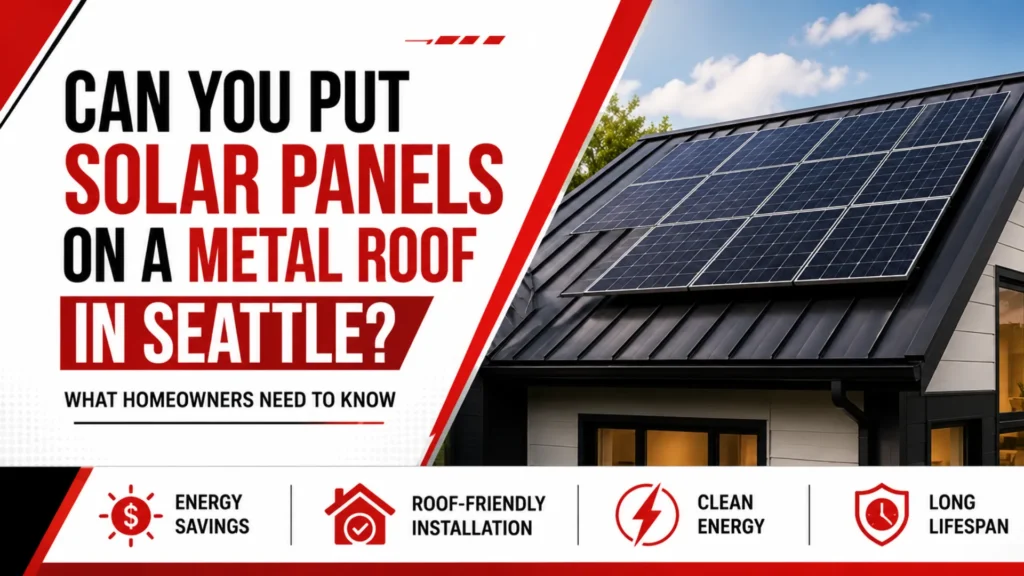
Yes, you can put solar panels on a metal roof in Seattle, and in many cases, metal roofing is one of the best surfaces for solar panel installation. With the right mounting system and professional installation, solar panels can improve energy efficiency without compromising the roof’s durability or warranty.
Seattle’s climate frequent rain, occasional wind storms, and long gray stretches where every bit of sunlight matters — actually makes metal roofing and residential solar a particularly smart pairing. Metal roofs shed water efficiently and hold up to decades of Pacific Northwest weather, while solar panels installed with the correct metal roof solar installation techniques won’t compromise that weather resistance.
Whether you have a standing seam, corrugated, or ribbed metal roof, a qualified solar and roofing contractor can find a mounting solution that keeps your roof watertight for the long haul.
Why Metal Roofs Are Ideal for Solar Panels
Metal roofs and solar panels complement each other exceptionally well because they both offer long service lives, low maintenance requirements, and excellent durability in Seattle’s climate. When you’re investing in a solar energy system that should perform for 25-plus years, it makes sense to put it on a roof that will outlast it.
Long Roof Lifespan
A quality metal roof can last 40 to 80 or more years, meaning homeowners typically won’t need to remove and reinstall solar panels for a roof replacement mid-way through the panels’ lifespan — a common (and costly) issue with shorter-lived roofing materials.
Excellent Structural Strength
Metal roofing systems are built to handle significant loads and stand up to wind, snow, and debris, giving solar installers a stable, dependable surface to mount racking and panels.
Low Maintenance
Metal roofs don’t crack, curl, or lose granules the way asphalt shingles do over time, which means fewer roof-related disruptions to your solar array over the years.
Energy Efficiency
Metal roofing reflects heat rather than absorbing it, contributing to better home energy efficiency and working hand-in-hand with the energy savings your solar panels provide.
Sustainability
Metal roofing is often made from recycled materials and is fully recyclable at the end of its life, aligning with the same clean energy, sustainability-minded mindset that drives most solar buyers.
Best Metal Roof Types for Solar Panel Installation
Not all metal roofs are installed the same way. The type of metal roofing system on your home affects the mounting method and installation process your solar contractor will use.
Standing Seam Metal Roof
A standing seam metal roof is the preferred option for solar installation because of clamp-on mounting systems. These standing seam clamps attach directly to the raised seams of the roof, meaning installers can secure the entire solar racking system without drilling a single hole into the roofing material. This keeps your roof warranty intact and virtually eliminates leak risk.
Corrugated Metal Roofing
Corrugated metal roofing requires specialized mounting brackets that are designed to fit into the ridges of the panel and are properly flashed and sealed at each attachment point to maintain a weatherproof roof.
Ribbed Metal Roofing
Ribbed metal roofing has its own set of installation requirements, generally using brackets or clips engineered for the specific rib profile, ensuring solar racking is secure without stressing the panel seams.
How Solar Panels Are Installed on a Metal Roof
Professional installers use different mounting methods depending on the roofing profile to ensure a secure and weatherproof installation. Here’s what the process typically looks like:
Roof Inspection — The installer (ideally alongside a roofing contractor) inspects your metal roof for existing damage, wear, or areas of concern before any work begins.
Structural Assessment — The team evaluates your roof load capacity to confirm the structure can safely support the added weight of the solar energy system.
Selecting the Mounting System — Based on your roof profile (standing seam, corrugated, or ribbed), the installer chooses the appropriate solar mounting system and hardware.
Installing Solar Racking — The racking, which will hold the photovoltaic panels in place, is attached using clamps or brackets suited to your roof type.
Mounting Photovoltaic Panels — Panels are secured to the racking system, angled for optimal sun exposure given Seattle’s specific latitude and typical cloud cover.
Electrical Connection — A licensed electrician wires the system to your home’s electrical panel and, if applicable, the utility grid.
Final Inspection — The completed solar panel installation is inspected for safety, code compliance, and proper roof flashing before it’s signed off.
Do Solar Panels Damage a Metal Roof?
When installed correctly, solar panels should not damage a metal roof. In fact, non-penetrating mounting systems can help preserve the roof’s integrity while maintaining warranty coverage.
The key factors that determine whether your roof stays protected include:
- Non-penetrating solar mounts: Standing seam clamps attach without piercing the metal panel, which is one of the biggest advantages of pairing solar with this roofing style.
- Waterproof installation: Any point where hardware does need to penetrate the roof (common on corrugated or ribbed profiles) should be properly flashed and sealed.
- Professional installation: Experienced solar and roofing contractors know how to work with metal roofing specifically, reducing the risk of improper attachment or leaks.
- Roof warranty: Always check with your roofing manufacturer and installer before beginning work, since some warranties have specific requirements for third-party attachments like solar racking.
Benefits of Installing Solar Panels on a Metal Roof in Seattle
Seattle homeowners can enjoy several long-term advantages by combining a durable metal roof with a high-efficiency solar energy system.
- Lower Electricity Bills: Reduce your dependence on the grid and see real savings on monthly energy costs.
- Renewable Energy: Power your home with clean, renewable energy instead of relying solely on traditional utility sources.
- Reduced Carbon Footprint: Cut your household’s environmental impact with a cleaner energy source.
- Increased Home Value: Homes with solar and metal roofing tend to be more attractive to buyers, particularly those looking for low-maintenance, energy-efficient roofing.
- Longer Roof Life: A well-maintained metal roof paired with a properly installed solar system can protect your home for decades.
- Better Return on Investment: With incentives, tax credits, and long-term energy savings, solar on metal roofing often delivers a strong solar investment over time.
Challenges to Consider Before Installation
Before moving forward with a metal roof solar installation, it’s worth considering a few factors that can affect performance and cost:
- Roof orientation: South-facing roofs typically capture the most sunlight, though east- and west-facing roofs can still work well.
- Tree shade: Seattle’s tree-heavy neighborhoods can create shading issues that reduce solar output.
- Roof pitch: Your roof’s angle affects how much sunlight your panels can capture throughout the year.
- Electrical upgrades: Older homes may need panel upgrades to support a new solar energy system.
- Local permitting: Seattle solar installation projects require permits and inspections, which your contractor should handle on your behalf.
- Weather conditions: Seattle’s rain and cloud cover don’t prevent solar from working, but they do factor into system sizing and expected output.
Cost of Installing Solar Panels on a Metal Roof in Seattle
Several factors influence the total cost of a solar panel installation on a metal roof, including:
- Solar panel costs: Panel efficiency and brand affect upfront pricing.
- Mounting hardware: Standing seam clamps are often more cost-effective than penetrating mounts because they require less labor and no additional flashing.
- Roof type: Corrugated and ribbed profiles may require more specialized (and costly) brackets.
- Labor: Installation complexity, roof height, and accessibility all factor into labor costs.
- Electrical work: Panel upgrades or additional wiring add to the total project cost.
- Incentives: Local and state solar incentives can offset a portion of your investment.
- Tax credits: The federal solar tax credit can significantly reduce your net installation cost — a solar contractor or tax professional can walk you through current eligibility.
Every home is different, so the most accurate way to understand solar panels cost Seattle homeowners can expect to pay is to get a personalized quote based on your roof type, energy usage, and system size.
Metal Roof vs Asphalt Roof for Solar Panels
| Feature | Metal Roof | Asphalt Shingles |
|---|---|---|
| Lifespan | 40–80+ Years | 20–30 Years |
| Solar Compatibility | Excellent | Good |
| Maintenance | Low | Medium |
| Mounting Options | Clamp-On Available | Roof Penetrations Required |
| Long-Term Value | Excellent | Good |
When comparing metal roof vs asphalt roof options for a solar installation, metal roofing generally wins on longevity, mounting flexibility, and long-term value — making it a smart pairing for homeowners planning to invest in solar.
Maintenance Tips for Solar Panels on Metal Roofs
Keeping your solar-equipped metal roof performing well doesn’t take much, but a few regular habits go a long way:
- Annual inspections: Have a roofing contractor check your roof and mounting hardware once a year.
- Cleaning debris: Clear leaves, needles, and moss that can accumulate around panels, especially under Seattle’s tree canopy.
- Monitoring mounting hardware: Check that clamps and brackets remain tight and corrosion-free.
- Checking flashing: Inspect roof flashing around any penetration points to catch leaks early.
- Solar panel cleaning: Keep panels free of dirt and grime to maintain peak energy output.
- Electrical inspections: Periodically have the electrical components of your system checked for safety and performance.
Frequently Asked Questions
Are standing seam metal roofs best for solar panels?
Yes, standing seam roofs are widely considered the best option because clamp-on mounting systems attach without penetrating the roof.
Do solar panels damage a metal roof?
No, not when installed correctly by an experienced solar and roofing contractor using the appropriate mounting system for your roof profile.
Can solar panels be installed without drilling into a metal roof?
Yes, standing seam metal roofs allow for non-penetrating mounts using specialized clamps, avoiding drilling altogether.
How much does solar panel installation cost?
Costs vary based on system size, roof type, mounting hardware, and labor. A personalized quote is the best way to get an accurate number for your home.
Will solar panels void my roof warranty?
Not typically, as long as installation follows manufacturer guidelines and is performed by a qualified contractor. Always confirm with your roofing manufacturer before installation.
Conclusion
So, can you put solar panels on a metal roof in Seattle? Absolutely, and for many homeowners, it’s one of the best combinations for maximizing durability, energy efficiency, and long-term savings. A professionally installed solar energy system on a quality standing seam metal roof can provide decades of reliable performance while lowering electricity costs and supporting a more sustainable home.
If you’re considering a metal roof solar installation in the Seattle area, the team at Epic Roofing can help you evaluate your roof, plan the right solar mounting system, and connect you with trusted solar partners to make the transition to renewable energy as smooth as possible. Contact Epic Roofing today to get started.