
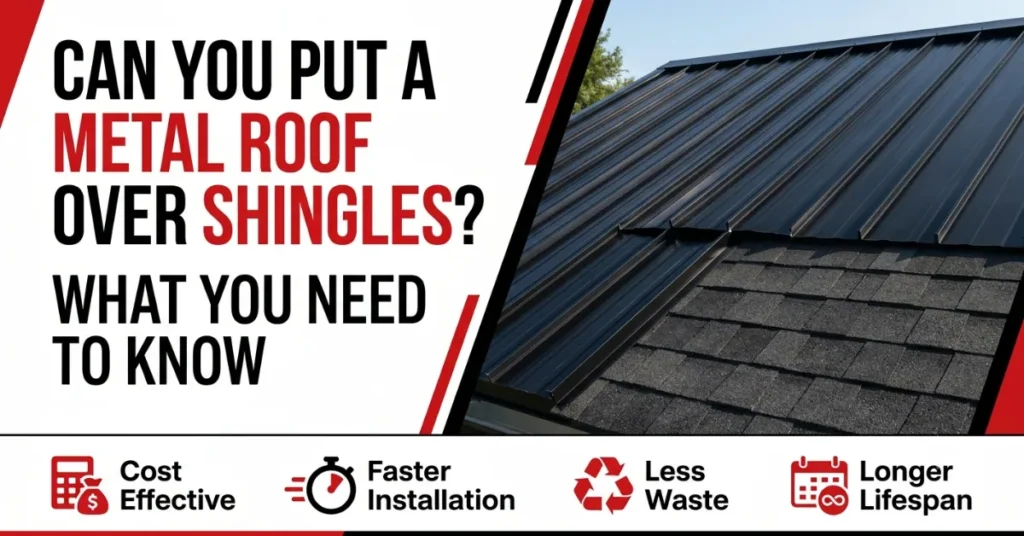
If your asphalt shingles are aging and you’re considering an upgrade, you’ve probably asked yourself: can you put a metal roof over shingles? The good news is that in many cases, yes — you can install a metal roof over your existing shingles, provided the roof is structurally sound and your local building codes allow it. This approach, often called a roof overlay, can save on labor costs, reduce landfill waste, and shorten installation time compared to a full tear-off.
That said, installing a metal roof over shingles isn’t right for every home. Roof condition, number of existing layers, ventilation, and structural capacity all play a role in whether an overlay is a smart long-term investment or a shortcut that causes problems down the road. A professional roof inspection is the best way to know for sure before moving forward.
Can You Put a Metal Roof Over Shingles?
Yes, in many situations you can put a metal roof over shingles without removing the existing roofing material first. Installing a metal roof over shingles is a common form of re-roofing, and when done correctly, it can perform just as well as a roof installed on a fully torn-off deck.
That said, several factors need to check out before an overlay makes sense: the shingles must be in reasonably good condition, the roof deck underneath needs to be solid, ventilation has to be adequate, and local building codes need to permit this type of roof overlay. Skipping this evaluation is where most problems with metal roofs over shingles start.
Benefits of Installing a Metal Roof Over Shingles
Installing a metal roof over asphalt shingles offers several real advantages for homeowners looking to upgrade without the cost and mess of a complete roof replacement.
Saves Tear-Off Costs. Removing old shingles is labor-intensive and expensive. Skipping that step with an overlay can meaningfully lower your total project cost.
Faster Installation. Without the time needed to strip the old roof down to the decking, a metal roof over shingles typically goes up faster, meaning less disruption to your household.
Less Landfill Waste. Roof tear-offs generate significant construction debris. An overlay keeps the old shingles in place, reducing what ends up in a landfill.
Improves Energy Efficiency. Metal roofing reflects more solar heat than asphalt shingles, and the added layer can improve insulation, helping lower cooling costs in warmer months.
Extends Roof Lifespan. A well-installed metal roof can last 50 years or more, far outlasting the asphalt shingles underneath and reducing how often you’ll need to think about roof replacement again.
Better Weather Protection. Metal roofing holds up well against wind, hail, and heavy rain, offering stronger protection than aging asphalt shingles alone.
When Should You Remove Shingles First?
Although installing a metal roof over shingles is often possible, there are situations where a complete tear-off is the safer, and sometimes the only legal, option.
Multiple Layers of Shingles. Many local codes limit roofs to a maximum number of layers. If your roof already has two layers of shingles, adding metal on top may not be permitted.
Rotten Roof Decking. If the roof decking underneath has water damage or rot, it needs to be repaired or replaced before any new roofing goes on — overlaying it only hides a bigger problem.
Structural Damage. Sagging areas, cracked rafters, or other structural integrity issues need to be addressed first; adding metal roofing on top of a compromised structure isn’t safe.
Severe Roof Leaks. Persistent or widespread leaks usually indicate underlying damage that needs full access to diagnose and repair properly.
Poor Roof Ventilation. Inadequate ventilation can trap heat and moisture under a new metal roof, accelerating deterioration of both layers.
Building Code Requirements. Some jurisdictions require a full tear-off regardless of roof condition. A roofing contractor or roof inspection can confirm what your local codes actually require.
How Is a Metal Roof Installed Over Shingles?
Proper installation is what separates a metal roof over shingles that lasts decades from one that develops leaks and moisture problems within a few years.
Roof Inspection. A thorough inspection identifies the shingle condition, decking integrity, and any hidden damage before work begins.
Repair Damaged Areas. Any soft spots, minor leaks, or damaged sections are repaired first so the new roof isn’t installed over existing problems.
Install Underlayment. A layer of synthetic underlayment or a specialized moisture barrier is added over the shingles to protect against condensation and improve the new roof’s performance.
Add Battens or Purlins (If Required). Horizontal battens or purlins are often installed to create an air gap between the shingles and the metal panels, which helps with ventilation and reduces noise.
Install Metal Roofing Panels. Panels are secured using roofing screws designed for the specific roofing system, whether that’s a standing seam metal roof or another panel type.
Install Flashing and Ridge Caps. Roof flashing around chimneys, vents, and valleys, along with ridge caps at the roof’s peak, seal the vulnerable transition points against water intrusion.
Final Inspection. A completed installation should be inspected to confirm proper fastening, sealed flashing, and adequate ventilation before the job is considered finished.
Best Types of Metal Roofing for Installation Over Shingles
| Roofing Type | Best For | Lifespan |
|---|---|---|
| Standing Seam | Residential Homes | 50–80 Years |
| Corrugated Metal | Budget Projects | 40–60 Years |
| Metal Shingles | Traditional Appearance | 40–70 Years |
| Stone-Coated Steel | Premium Homes | 50+ Years |
A standing seam metal roof is popular for residential overlays because of its clean look and excellent weather resistance, though it typically costs more upfront. Corrugated metal roofing is a budget-friendly option often used on simpler structures. Metal shingles offer the appearance of traditional roofing materials while providing the durability of metal. Stone-coated steel roofing sits at the premium end, combining the strength of steel with the appearance of tile or shake.
Building Codes and Structural Requirements
Before installing a metal roof over shingles, it’s essential to confirm what your local building codes actually allow. Requirements vary by city and county, and can include:
- Limits on the number of existing roofing layers allowed
- Roof weight limits, since metal roofing is generally lighter than shingles but still adds load
- Structural inspections to confirm the roof and framing can support the new system
- Permit requirements, which most jurisdictions require for any roof overlay or replacement
- Manufacturer installation guidelines, which often need to be followed to keep warranties valid
A licensed roofing contractor in Seattle familiar with local roofing regulations can confirm what applies to your specific property before work begins.
Common Problems When Installing a Metal Roof Over Shingles
When an overlay is done poorly, or without proper evaluation, several issues can develop:
- Trapped moisture between the shingles and metal panels, which can lead to mold and decking damage over time
- Poor ventilation, which accelerates heat and moisture buildup under the roof
- Uneven roof surface, caused by worn or curling shingles that create an inconsistent base for the metal panels
- Improper fastening, which can lead to panels loosening or lifting in high winds
- Low-quality underlayment, which fails to provide an adequate moisture barrier
- Flashing mistakes, a common source of leaks around chimneys, skylights, and valleys
Most of these problems trace back to skipping a proper roof inspection or hiring an inexperienced installer.
Metal Roof Over Shingles vs. Complete Tear-Off
| Feature | Metal Roof Over Shingles | Full Tear-Off |
|---|---|---|
| Installation Time | Faster | Longer |
| Cost | Lower | Higher |
| Waste | Minimal | Higher |
| Roof Inspection | Limited | Complete |
| Repairs | Limited | Full Access |
| Lifespan | Excellent | Excellent |
An overlay is often the better choice when the existing roof is in good shape and budget or timeline is a priority. A full tear-off makes more sense when there’s uncertainty about the roof decking’s condition, since it gives the roofing contractor complete access to inspect and repair anything underneath.
How Much Does It Cost to Install a Metal Roof Over Shingles?
The cost to install a metal roof over shingles depends on several variables:
- Roof size: larger roofs require more material and labor
- Roofing material: standing seam, corrugated, metal shingles, and stone-coated steel all carry different price points
- Roof pitch: steeper roofs are more labor-intensive and often cost more to work on
- Labor costs: vary by region and contractor experience
- Underlayment: higher-quality synthetic underlayment adds to material costs but improves performance
- Flashing: additional flashing work around complex rooflines increases cost
- Permits: required in most areas and vary by jurisdiction
- Repairs: any necessary repairs to the existing roof before installation add to the total
Getting a detailed roofing estimate from a local Seattle contractor is the most reliable way to understand costs specific to your home.
Does a Metal Roof Over Shingles Increase Home Value?
A metal roof can be a meaningful investment in your home’s value. Benefits that appeal to future buyers include improved curb appeal, better energy efficiency, a significantly longer lifespan than asphalt shingles, and lower long-term maintenance needs.
Many homeowners see a solid return on this kind of residential roofing upgrade at resale, particularly in markets where buyers are increasingly aware of energy-efficient roofing and long-term property value.
DIY vs. Hiring a Professional Roofing Contractor
DIY
Pros: Lower upfront cost; may be feasible for small, simple structures like sheds or detached garages.
Cons: Significant safety risks working at height, potential warranty issues if manufacturer requirements aren’t followed, and a higher chance of installation errors that lead to leaks.
Professional Installation
Benefits: A proper roof inspection before work begins, compliance with local building codes, better overall workmanship, and access to manufacturer warranties that typically require professional installation to remain valid.
For most homes, hiring an experienced roofing contractor is the safer and more cost-effective choice long-term, even with the higher upfront labor cost.
Maintenance Tips for a Metal Roof Installed Over Shingles
Keeping a metal roof over shingles performing well for decades comes down to consistent upkeep:
- Schedule annual roof inspections to catch small issues early
- Keep gutters clean to prevent water backup at the roofline
- Check flashing regularly for signs of wear or separation
- Tighten fasteners that may loosen over time
- Remove debris like leaves and branches from the roof surface
- Monitor ventilation to prevent heat and moisture buildup
- Address any signs of moisture buildup immediately to avoid deeper damage
Frequently Asked Questions
Do you have to remove shingles first?
Not always. Shingles typically need to be removed if there are already multiple layers, significant damage, or if local codes require a full tear-off.
Will a metal roof trap moisture?
It can, if ventilation and underlayment aren’t handled correctly. Proper installation with adequate airflow prevents this.
What underlayment is best for a metal roof?
Synthetic underlayment is generally recommended for its durability and moisture resistance compared to traditional felt.
How long will a metal roof over shingles last?
Depending on the material, a metal roof over shingles can last anywhere from 40 to 80 years with proper installation and maintenance.
Conclusion
Can you put a metal roof over shingles? In many cases, the answer is yes. If the existing roof is structurally sound, properly ventilated, and meets local building codes, installing a metal roof over shingles can be a cost-effective, durable, and energy-efficient solution compared to a full roof replacement. That said, an overlay isn’t right for every roof — multiple shingle layers, damaged decking, or poor ventilation may call for a complete tear-off instead.
A professional roof inspection in Seattle is the best way to determine whether a metal roof overlay or full replacement is the right path for your home. Whether you’re considering a standing seam metal roof or another roofing system, working with an experienced local roofing contractor ensures the job is done right, with proper underlayment, flashing, and long-term performance in mind.