

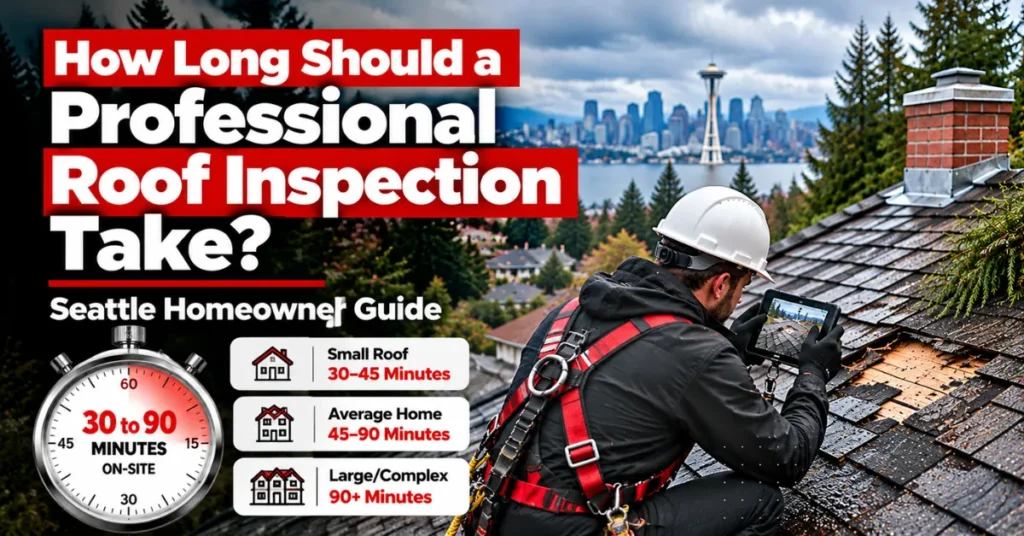
A professional roof inspection on a typical single-family home usually takes 30 to 90 minutes on site, with the written report following within a few hours to a few days. Small, simple roofs can be done in about 30 to 45 minutes. Steep, multi-level, or older roofs with an attic review often take 75 minutes to two hours. A visit of 10 to 15 minutes is rarely enough to check flashing, drainage, and the attic properly. This guide shows where the time goes, what changes it, and how to tell a thorough inspection from a rushed one.
Key Points
- Most residential roof inspections take 30 to 90 minutes on site.
- Small, simple roofs may take 30 to 45 minutes, while large, steep, or complex roofs can take two hours or more.
- The longest stages are the roof surface, flashing, and attic review.
- Size, pitch, material, attic access, and roof condition all change the timeline.
- Written reports typically arrive within a few hours to a few days.
- A 10 to 15 minute visit with no attic check or photos is a warning sign.
- Ask for the visit length and report delivery time before you book.
The Short Answer
These are typical ranges, not guarantees. Your roof’s size, access, and condition decide the real number.
| Situation | Typical On-Site Time | What Drives It |
|---|---|---|
| Small, simple single-story home | 30 to 45 minutes | Few slopes, easy access, clear attic |
| Average two-story home | 45 to 90 minutes | More slopes, dormers, chimney, vents |
| Large, steep, or complex roof | 90 minutes to 2+ hours | Many valleys and penetrations, extra safety setup |
| Pre-purchase roof inspection | 45 to 90 minutes | Remaining-life estimate and attic review |
| Drone-assisted inspection | Flight plus review, often similar total time | Weather window, airspace, image review |
| Commercial roof | Several hours or more | Roof area, drainage, equipment, membrane seams |
Commercial timing varies widely with roof size, so a quote should state the expected duration rather than a generic estimate.
1. How the Time Breaks Down
Knowing where the minutes go is the easiest way to judge whether an inspection was thorough. A typical 60 to 75 minute residential visit looks like this:
Conversation and background (5 to 10 minutes). The inspector asks about roof age, past leaks, repairs, and why you called. Skipping this step usually means the inspector is working from assumptions.
Exterior walk-around (5 to 10 minutes). A look from the ground catches sagging lines, heavy moss, missing shingles, and gutter or fascia damage before anyone climbs.
Roof surface (15 to 25 minutes). This is the longest stage. The inspector works across every slope, checking for cracked, curled, or lifted shingles, granule loss, exposed nails, and wear patterns. Material matters here, because the type of roof you have changes both what is checked and how fast it can be done safely.
Flashing and penetrations (10 to 15 minutes). Chimneys, vents, skylights, valleys, and wall joints are small areas that cause a large share of leaks, so they deserve unhurried attention. A failing chimney joint, for example, is a common and contained repair, as covered in our guide to chimney flashing repair.
Gutters and drainage (5 to 10 minutes). Slope, attachment, clogs, and overflow staining on the siding below.
Attic review (10 to 20 minutes). Stains, damp insulation, daylight, mold, and ventilation. This stage often reveals what the surface hides, which is why what an attic reveals about roof health is worth understanding before your visit.
Photos and notes (throughout, plus 5 to 10 minutes at the end). Good documentation is built during the inspection, not reconstructed afterward.
Add those up and a thorough inspection rarely fits in 15 minutes. These stage times are typical working estimates, and a good inspector will adjust them to the roof in front of them.
2. What Makes an Inspection Faster or Slower
Roof size and number of slopes. More slopes, dormers, and valleys mean more surface and more transitions to check.
Pitch. Steep roofs take longer because the inspector moves carefully, sets up extra safety equipment, or relies on a drone and zoom camera for parts of the roof.
Roofing material. Asphalt shingles are usually the fastest to evaluate. Tile, slate, and standing seam metal call for slower, more careful movement and closer inspection of fasteners and seams.
Attic access. A clear hatch and open walkway save time. A cramped attic full of stored items does the opposite.
Roof condition. A roof in good shape is quick to document. A roof with widespread damage requires more photos, more notes, and often more questions from the homeowner.
Weather and surface conditions. Wet, slick, or moss-covered surfaces slow the work and may limit where the inspector can safely walk.
Report depth. A quick verbal assessment is faster than a photo-documented written report, but the report is what you can actually use for repairs, a sale, or an insurance conversation.
3. How Long Different Inspection Types Take
Routine annual inspection. The standard 30 to 90 minute visit, depending on roof size and complexity. If you are unsure how often to schedule one, see how often you should get a roof inspection in Seattle.
Pre-purchase inspection. Buyers need a remaining-life estimate and a clear attic review, so these tend to run toward the longer end of the range. The inspection also has to fit inside your inspection window, which is covered in our pre-purchase roof inspection guide for Seattle buyers.
Storm or claim inspection. Documentation is the priority, so expect extra time for dated photos, attic evidence, and notes separating storm damage from wear. See roof inspection for insurance claims for what a claim-ready report contains.
Drone-assisted inspection. The flight itself can be short, but image review adds time, and the schedule depends on a dry, calm window. The tradeoffs are explained in how drone roof inspections work.
Thermal inspection. Thermal scanning needs the right conditions and a review of the data afterward, so the total time is usually longer than a visual check, and results often need confirming by hand.
Commercial inspection. Large roofs with drainage systems, rooftop equipment, and membrane seams can take several hours or more. If you manage a larger building, see our commercial roofing services in Seattle.
4. How Long the Report Takes
The visit is only part of the timeline. The report is what turns observations into decisions.
A written report with labeled photos, a condition summary, and repairs ranked by urgency generally takes a few hours to a few days to prepare, depending on the provider and the complexity of the findings. Some inspectors deliver a summary the same day and a full report shortly after.
If you are on a deadline, such as a home purchase or an insurance filing, ask for the delivery time before you book. A good question to ask is: “When will I receive the written report, and what will it include?”
A useful report should include photos of each problem area, a condition summary for the surface, flashing, gutters, and attic, an estimate of remaining life, and recommended repairs ranked as urgent, soon, or monitor.
5. Seattle Factors That Affect Timing
Local conditions can lengthen or shift an inspection.
Wet and moss-covered roofs. Between fall and spring, many roofs are damp, and moss makes surfaces slick. Inspectors may walk less of the roof and rely more on a drone, zoom camera, and attic check, which changes how the time is spent.
Weather windows. Rain and wind can delay scheduling. Booking early in fall, before storm season fills calendars, usually gives you more flexibility. Our fall roof maintenance checklist for Seattle homeowners explains why early fall is the best window.
Hillside and tree-covered lots. Homes in neighborhoods such as Ballard, West Seattle, and Queen Anne can have tight access, steep driveways, and mature evergreens that limit ladder placement and flight paths.
Older homes. Additions, layered roofs, and attics with added insulation take longer to evaluate than a simple newer roof, especially when blocked soffit vents or past repairs need a closer look.
6. Warning Signs of a Rushed Inspection
Speed alone does not prove a problem, because a small roof in good condition really can be quick. But combine a short visit with any of these and you should be cautious:
- The inspection lasts only 10 to 15 minutes on an average home
- The inspector never goes into the attic
- You receive no photos, or only generic ones
- Flashing, vents, and chimney areas are not mentioned
- The report is verbal only
- You are told the roof needs full replacement but shown no evidence
- You are pressured to sign a contract the same day
If a visit felt rushed and the findings seem thin, a second opinion is reasonable. Comparing contractors on thoroughness, not just price, starts with knowing how to find a reliable roofing company in Seattle, and the questions to ask before hiring a roofer help you hold each one to the same standard.
7. Can an Inspection Take Too Long?
Occasionally. An inspection that stretches well beyond the quoted time is not automatically a problem, since damage, difficult access, or an unclear leak source can add legitimate time. But it can be a concern when:
- No one explained why the visit is running long
- The extra time is spent on a sales presentation rather than documentation
- You feel pressured to commit to work during the visit
A good inspector tells you when the scope changes and why. If a leak needs deeper investigation than the original visit allows, a separate, targeted follow-up is often better than an open-ended first appointment.
8. How to Prepare and Save Time
A little preparation shortens the visit and improves the results:
- Clear the path to the attic hatch and move stored items away from it.
- Trim low branches touching the roof if you can do so safely from the ground.
- Gather paperwork such as repair invoices, warranty papers, and the roof’s installation date.
- Note where you have seen stains, drips, or noises, and share that at the start.
- Secure pets, and tell neighbors if a drone will be used.
You do not need to be present for the whole visit, but being there for the final walkthrough lets you ask questions while the findings are fresh.
What Happens After the Inspection
Most results lead to one of a few outcomes. If the roof is in good shape, schedule the next check for next year. If there are minor issues, roof repair is usually the practical path. If damage is widespread or the roof is near the end of its life, roof replacement may be the better investment. Whatever the outcome, you should never feel pressured to decide on the spot.
Schedule an Inspection With Epic Roofing
If you want a roof inspection that explains what was checked, how long each stage takes, and what the findings mean, Epic Roofing Company can inspect the roof and attic, document the results, and outline the practical next steps. Learn more about our roof inspection services in Seattle, or contact us to schedule yours.
Frequently Asked Questions
How long does a roof inspection take for an average house?
Most average homes take 45 to 90 minutes on site, plus time for the written report. Small and simple roofs can be done in about 30 to 45 minutes.
Is a 15-minute roof inspection enough?
Rarely. That is usually not enough time to check every slope, the flashing, the gutters, and the attic. It may be fine for a quick visual look at a very small roof, but not for a full inspection.
Do I need to be home during the inspection?
Not for the whole visit. Being there for the final walkthrough is helpful, and you will need to provide access to the attic.
How long until I get the roof inspection report?
Often within a few hours to a few days, depending on the provider and the complexity of the findings. Ask for the delivery time before you book.
Does a drone make the inspection faster?
It can speed up access to steep or fragile roofs, but image review and weather delays can offset the savings. It also does not replace an attic check.
Why would my roof inspection take longer than quoted?
Damage, tricky access, a cramped attic, or a hard-to-trace leak can add time. A good inspector explains the reason when the schedule changes.
How long does a pre-purchase roof inspection take?
Typically 45 to 90 minutes on site, with the report afterward. Book it early in your inspection window so the report arrives in time to negotiate.
Conclusion
A professional roof inspection should take long enough to cover the roof surface, flashing, drainage, and attic, and then document what was found. For most Seattle homes, that means roughly 30 to 90 minutes on site, followed by a written report. Time is not the only measure of quality, but a visit that skips the attic, offers no photos, and wraps up in minutes should raise questions.
Ask how long the visit will take, what it will include, and when the report will arrive before you book. If you want an inspection that answers all three, Epic Roofing Company can walk you through the process and explain what the findings mean for your roof.