

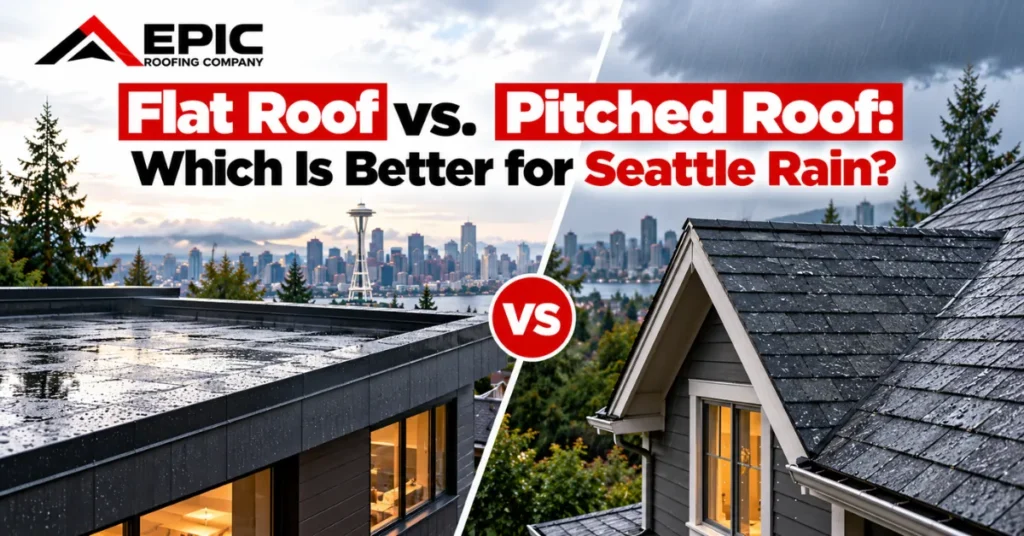
Seattle’s frequent rainfall makes choosing the right roofing system an important decision for homeowners. A roof must do more than look good it needs to manage moisture, direct water away from the home, and withstand years of wet weather.
Two common options are flat roofs and pitched roofs. Flat roofs offer a modern appearance and can be practical for certain home designs, while pitched roofs are known for their ability to shed rainwater efficiently.
But which is better for Seattle’s rainy climate?
For many Seattle homes, a properly installed pitched roof offers an advantage because its slope helps rainwater drain naturally. However, a flat roof can also provide reliable protection when it has adequate drainage, quality waterproofing, and regular maintenance.
Key Points
- Pitched roofs help rainwater drain efficiently.
- Flat roofs need proper drainage and waterproofing.
- Flat roofs may cost less to install.
- Both roof types require regular maintenance.
- The best choice depends on your home’s design, budget, and drainage needs.
Why Seattle’s Rainfall Matters When Choosing a Roof
Seattle experiences frequent rainfall throughout the year, with particularly wet conditions during the fall and winter months. This makes effective roof drainage essential.
When rainwater cannot drain properly, it can contribute to problems such as:
- Roof leaks and water intrusion
- Deteriorating roofing materials
- Damaged flashing and roof seams
- Moisture buildup in the attic or roof assembly
- Rot in roof decking and structural components
- Gutter and downspout problems
The roof’s slope, drainage design, waterproofing materials, and installation quality all influence how well it performs.
A roof that works well in a dry climate may require additional drainage planning in a region like Seattle. That is why homeowners should consider more than just the initial installation price when comparing roofing systems.
What Is a Flat Roof?
A flat roof is a roofing system with a very low slope. Although it appears level, it should be designed with enough slope to direct rainwater toward drains, gutters, or designated drainage points.
Flat roofs are common on modern homes, commercial buildings, garages, and home additions. They can provide a clean architectural appearance and may offer usable rooftop space when properly engineered.
Common flat roofing materials include:
- TPO: A single-ply membrane commonly used for its reflective properties and welded seams.
- EPDM: A synthetic rubber roofing membrane known for flexibility and weather resistance.
- PVC: A single-ply roofing membrane with heat-welded seams.
- Modified bitumen: A layered asphalt-based roofing system used on low-slope roofs.
The right material depends on the building design, drainage requirements, budget, and expected performance.
Advantages of Flat Roofs
Modern Appearance: Flat roofs create a clean, contemporary look that works well with modern architectural styles. They are often used on homes with simple rooflines and minimalist designs.
Potentially Lower Installation Costs: Flat roofs may cost less to install than pitched roofs because they can require fewer materials and less complex framing. Actual costs depend on the roofing system, building size, accessibility, and project requirements.
Usable Rooftop Space: A properly designed flat roof may accommodate a rooftop deck, patio, or mechanical equipment. These features require appropriate structural support, waterproofing, drainage, and safety measures.
Easier Access for Maintenance: Flat roofs are generally easier to access than steeply pitched roofs. This can make inspections and certain maintenance tasks more straightforward, provided the roof is safely accessible.
Disadvantages of Flat Roofs
Drainage Requires Careful Planning: Flat roofs do not shed water as quickly as steep roofs. They rely on properly designed slopes, drains, scuppers, and gutters to move water away from the building.
If drainage becomes blocked or the roof develops low spots, water may collect on the surface.
Standing Water Can Cause Problems: Persistent ponding water can place additional stress on the roofing system and may contribute to deterioration or leaks. Proper drainage design and timely maintenance are especially important in Seattle.
Waterproofing Is Critical: Flat roofs depend heavily on the quality of their membrane, seams, flashing, and penetrations. Even a small installation defect can become a source of moisture intrusion.
Maintenance Is Essential: Leaves, needles, moss, and other debris can obstruct drains and drainage paths. Regular inspections help identify problems before they lead to costly repairs.
What Is a Pitched Roof?
A pitched roof has a noticeable slope that allows rainwater to flow toward the roof’s edges and drainage system. Pitched roofs are common on residential properties throughout Seattle and the surrounding areas.
They can be constructed using several roofing materials, including:
- Asphalt shingles
- Metal roofing
- Natural slate
- Synthetic slate
- Cedar shakes and shingles
The performance of a pitched roof depends on its slope, roofing material, underlayment, flashing, ventilation, and installation quality.
Advantages of Pitched Roofs
Efficient Rainwater Drainage: One of the biggest advantages of a pitched roof is its ability to shed rainwater. Gravity moves water down the roof surface and toward the gutters or eaves.
This can reduce the likelihood of standing water compared with a low-slope roof, provided the roof is properly designed and maintained.
Reduced Risk of Ponding Water: Because pitched roofs have a steeper surface, water generally drains away more quickly. This helps limit prolonged water exposure on the roofing materials.
However, drainage problems can still occur if gutters are blocked, flashing is damaged, or the roof has installation defects.
Wide Range of Roofing Materials: Pitched roofs can accommodate many roofing materials, allowing homeowners to choose based on appearance, budget, durability, and maintenance requirements.
For example, asphalt shingles are a common residential option, while metal and slate may offer longer service lives depending on the product and installation.
Attic and Ventilation Options: Pitched roofs can provide space for an attic or roof cavity. When properly designed, ventilation and insulation systems can help manage heat and moisture within the roof assembly.
Traditional Residential Appearance: Pitched roofs complement many traditional and contemporary Seattle homes. Their shape can also add architectural character to a property.
Disadvantages of Pitched Roofs
Higher Installation Costs in Some Cases: Pitched roofs may require more framing, roofing materials, labor, and safety equipment than flat roofs. Steeper or more complex roof designs can increase installation costs.
More Difficult Access: Steep roofs can be challenging to inspect, maintain, and repair. Roofing professionals may need specialized safety equipment to work on them.
Gutter Maintenance Is Still Necessary: A pitched roof directs water toward its drainage system, but clogged gutters and downspouts can still cause overflow and moisture problems.
Seattle homeowners should keep gutters clear of leaves, needles, and other debris.
Limited Rooftop Usability: Unlike some flat roofs, pitched roofs generally cannot be used as rooftop patios or decks. Their primary function is to protect the building and direct water away from the structure.
Flat Roof vs. Pitched Roof: Key Differences
The following table compares the two roofing systems for Seattle homes.
| Feature | Flat Roof | Pitched Roof |
|---|---|---|
| Roof Slope | Very low slope; designed to direct water toward drains | Noticeable slope that directs water toward the eaves |
| Rainwater Drainage | Depends on designed slope, drains, and scuppers | Generally sheds rainwater efficiently through gravity |
| Standing Water Risk | Higher if drainage is inadequate or blocked | Lower when properly designed and maintained |
| Installation Cost | May be lower, depending on the system and building | May be higher due to framing, materials, and labor |
| Maintenance | Membranes, seams, drains, and flashing need inspection | Roofing materials, flashing, gutters, and downspouts need inspection |
| Rooftop Use | May support a deck or equipment when properly engineered | Generally not suitable for rooftop decks |
| Seattle Suitability | Can perform well with reliable drainage and waterproofing | Often a practical choice for shedding frequent rainfall |
Which Roof Is Better for Seattle Rain?
For many Seattle homeowners, a pitched roof is a practical choice because its slope helps rainwater drain naturally. This can reduce the risk of prolonged water pooling and make the roof well suited to the region’s rainy conditions.
However, a flat roof should not automatically be considered a poor choice. Modern flat roofing systems can provide reliable protection when they are designed with adequate slope, quality waterproofing, and a dependable drainage system.
The best option depends on the home’s structure, architectural style, budget, and maintenance expectations.
Choose a Pitched Roof If:
- You want efficient natural rainwater drainage.
- Your home has a traditional or sloped roof design.
- You prefer a wide choice of residential roofing materials.
- You want to reduce the likelihood of standing water.
- You are comfortable maintaining gutters and inspecting roofing materials.
Choose a Flat Roof If:
- Your home has a modern or low-slope architectural design.
- You want to make use of potential rooftop space.
- You prefer a low-profile roof appearance.
- Your building can accommodate a reliable drainage system.
- You are prepared to maintain the roof membrane, drains, and flashing.
What Roofing Materials Work Best for Seattle’s Rain?
The roof style is only part of the decision. Roofing material also affects durability, maintenance, and long-term performance.
Asphalt Shingles
Asphalt shingles are widely used on pitched residential roofs. They offer a range of styles and price points, making them a common choice for homeowners.
Proper installation, suitable underlayment, ventilation, and regular maintenance are important for performance in Seattle’s wet climate.
Metal Roofing
Metal roofing can provide a durable option for pitched roofs. Its surface allows water to run off efficiently, and many metal roofing systems offer long service lives when installed correctly.
The type of metal, protective coating, fastening system, and installation details all influence performance.
TPO, EPDM, and PVC
These membrane systems are commonly used on flat and low-slope roofs. Their performance depends on correct installation, secure seams, suitable flashing, and effective drainage.
Homeowners should select a system appropriate for the roof design and follow the manufacturer’s installation and maintenance requirements.
How to Maintain Your Roof in Seattle’s Rainy Weather
Regardless of whether your home has a flat or pitched roof, regular maintenance can help protect it from moisture-related damage.
Keep Gutters and Drains Clear
Remove leaves, needles, and debris from gutters, downspouts, roof drains, and scuppers. Blocked drainage systems can cause water to back up or overflow.
Schedule Regular Roof Inspections
Have your roof inspected periodically, especially after severe weather or when you notice signs of damage. A professional can check roofing materials, flashing, seams, drainage, and other vulnerable areas.
Address Leaks Promptly
Water stains on ceilings, damp insulation, peeling paint, or musty odors may indicate moisture intrusion. Investigate these signs promptly to prevent further damage.
Check Flashing and Roof Penetrations
Areas around chimneys, vents, skylights, and other roof penetrations can be vulnerable to leaks. Flashing should be properly installed and maintained.
Avoid Improper Roof Access
Walking on roofing materials can cause damage, particularly on slate, shingles, and some membrane systems. Leave roof access and repairs to qualified professionals when appropriate.
Conclusion
Choosing between a flat roof and a pitched roof requires more than comparing appearance and installation costs. Seattle’s wet climate makes drainage, waterproofing, installation quality, and maintenance especially important.
A pitched roof can provide efficient rainwater runoff, while a flat roof can offer modern design and usable space when properly engineered.
If you are considering a roof replacement, repair, or new installation, Epic Roofing Company can help you evaluate your roofing needs and determine the right approach for your property.
Contact Epic Roofing Company to schedule a roof inspection and discuss a roofing solution designed to protect your Seattle home.